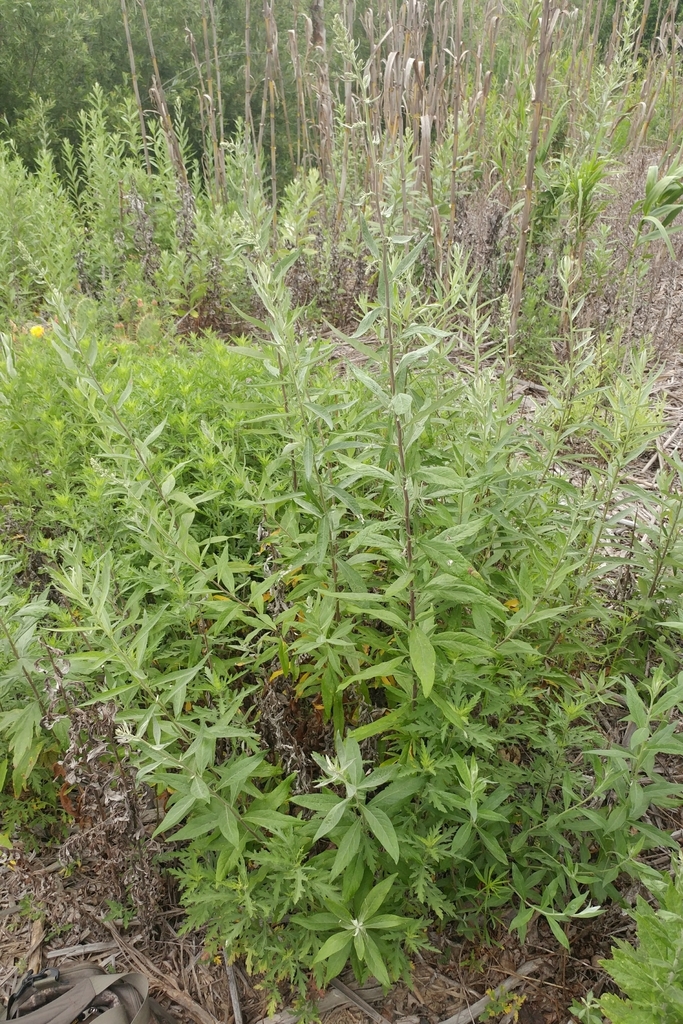
Artemisia douglasiana
- Origin
- North America
- Part used
- Root
- Tradition
- Traditional ethnobotany
Douglas's mugwort, also called "dream plant" by certain Indigenous peoples of the American West, grows along waterways and in damp clearings in California and Oregon. The Miwok, Yokuts, and Chumash nations had long used it, particularly its root, in care related to the female cycle and in certain ritual practices around sleep and dreams. This camphorous, bitter-scented plant holds a particular place in the traditional pharmacopoeia of the First Nations of the Pacific coast.
Traditional uses
Traditional support for the menstrual cycle
The root was traditionally used as a decoction by several Indigenous peoples to help with painful or irregular periods.
Support during childbirth
Some traditions report a use of the root around childbirth, reserved for the knowledge of elder women and traditional midwives.
A plant of dreams
Douglas's mugwort was reputed to encourage more vivid and memorable dreams, slipped under the pillow or burned in small amounts before sleep.
Traditional care for skin irritation
Used externally, a decoction of the whole plant traditionally served to soothe certain skin irritation or itching.
Before you use it
A plant of the Artemisia family, not to be used during pregnancy because of its traditional use related to menstruation and childbirth, which suggests uterine action. Internal use discouraged without the advice of a health professional trained in herbal medicine, because of a lack of modern safety data. Avoid in case of known allergy to plants of the daisy family (marguerites, mugworts, chrysanthemums). Do not use in children or for prolonged periods without qualified supervision.
The detailed notebook
- Prepared as a paste or decoction
- Traditional duration of use
- Known contraindications
- Related species and their uses
Where to find it
Partner herbalists — available with the detailed notebook.
Sources
PFAF, Wikipedia