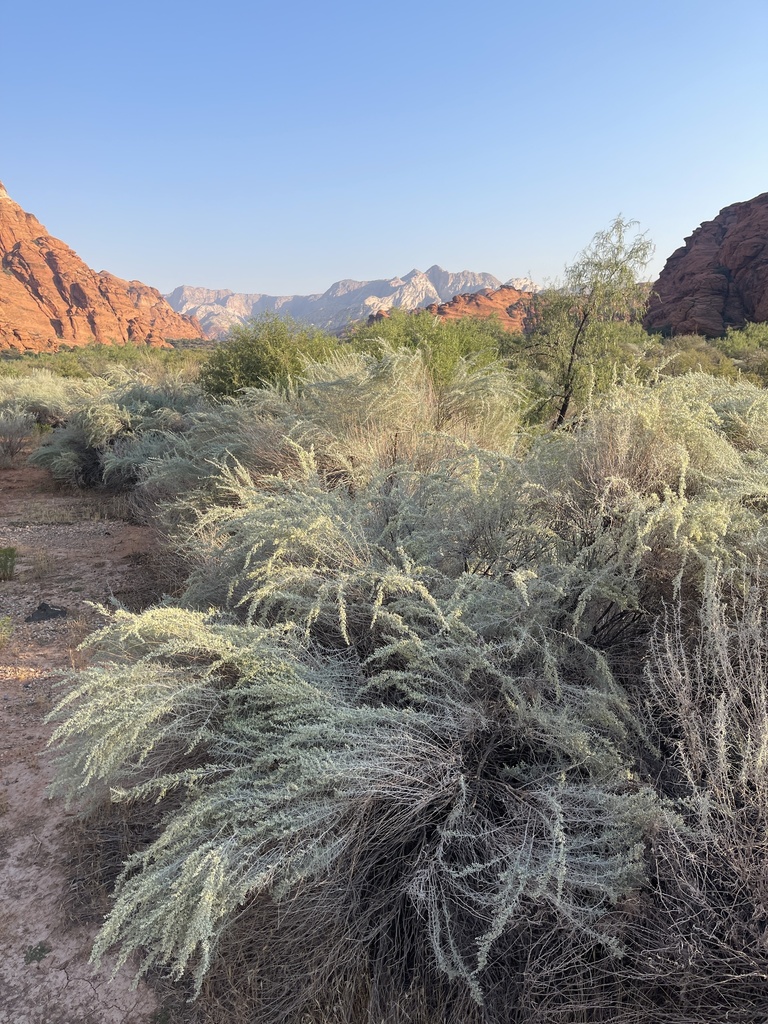
Artemisia filifolia
- Origin
- North America
- Part used
- See detailed notebook
- Tradition
- Traditional ethnobotany
On the arid lands of the North American Southwest, threadleaf sage, also called "sand sage" by the peoples of the plains, rises in silvery bushes among the dunes. The Native American nations of the Great Plains and the desert credited it with purifying properties, for both the body and the domestic space. Its camphorous, bitter scent, close to other mugworts, made it a plant of healing and ritual more than a food plant.
Traditional uses
Fumigations for respiratory ailments
The dried leafy stems were traditionally burned as a fumigation to clear the airways and purify the air of homes during periods of colds and fevers.
Skin washes and compresses
A mild leaf decoction served as an external wash to soothe skin irritation and insect stings among several peoples of the plains and desert.
A traditional use as a bitter tonic
At a very low dose, a leaf infusion was sometimes traditionally used as a bitter tonic to stimulate the appetite and support digestion.
A plant for purification and ritual fumigation
Like other mugworts, it was used dried in small bundles or bunches for the purification of places and people during traditional ceremonies.
Before you use it
A plant of the mugwort family containing aromatic, bitter compounds (thujone and possible relatives): internal use should be reserved for small amounts and occasional use. Internal use discouraged during pregnancy and breastfeeding, because of possible emmenagogue properties attributed to mugworts in general. Avoid prolonged or high-dose internal use; if in doubt, consult a health professional or an experienced herbalist. People allergic to plants of the daisy family (mugwort, chamomile, arnica...) should be cautious, including with fumigation.
The detailed notebook
- Prepared as a paste or decoction
- Traditional duration of use
- Known contraindications
- Related species and their uses
Where to find it
Partner herbalists — available with the detailed notebook.
Sources
Wikipedia