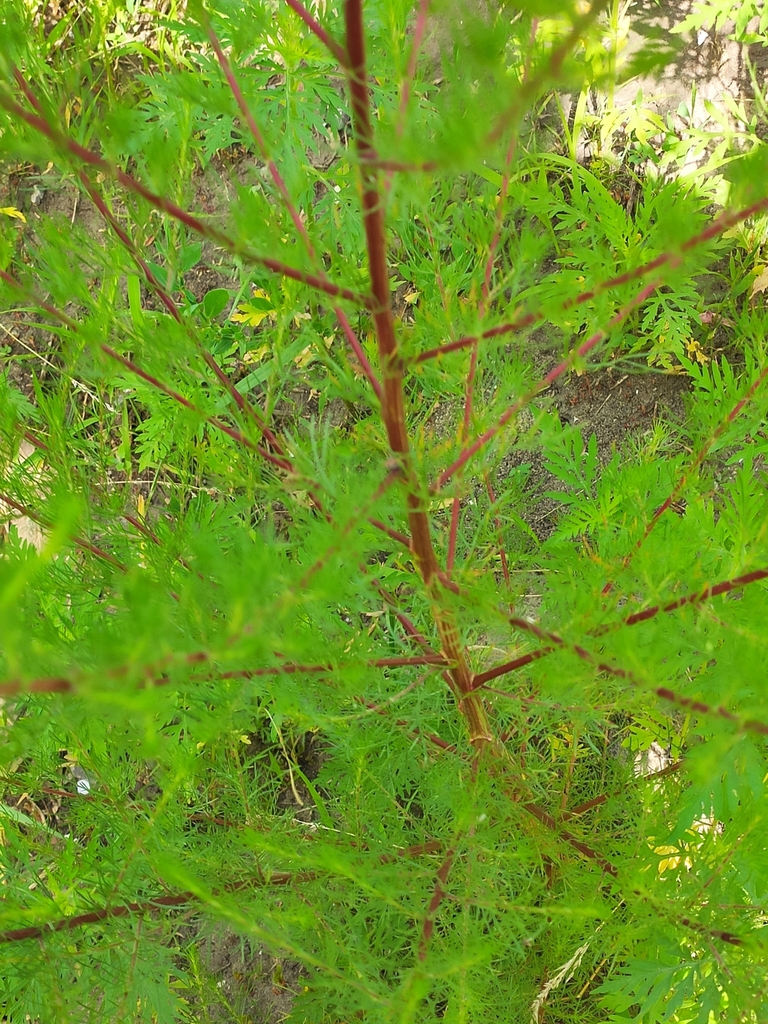
Artemisia scoparia
- Origin
- Asia
- Part used
- See detailed notebook
- Tradition
- Traditional ethnobotany
In old Chinese medical treatises, Artemisia scoparia — called "Yin Chen" when picked young — held a discreet but respected place among the bitter herbs of spring. Growing on arid land and roadsides across Asia, this fine, fragrant mugwort was reserved for knowledgeable herbalists, familiar with its traditional uses linked to the liver and digestion.
Traditional uses
Traditional liver support
The flowers and young shoots were used as a decoction in old Chinese pharmacopoeia to accompany digestive troubles linked to stagnation, particularly around periods of seasonal jaundice.
Traditional use against fevers
In certain regions of Central Asia, this mugwort was included in preparations meant to bring down mild fevers and ease general discomfort.
Support for elimination
Folk tradition credited it with gentle diuretic properties, promoting elimination through the urinary tract during spring cures.
Soothing external use
Poultices or washes made from a decoction of the flowers were sometimes applied to the skin to soothe certain irritations, following local uses poorly documented outside their region of origin.
Before you use it
A plant of the Asteraceae family: people allergic to ragweed, chamomile, or other mugworts should avoid it. Use is discouraged during pregnancy and breastfeeding, as a precaution, due to a lack of safety data. Do not use in children without the advice of a healthcare professional. If undergoing medication treatment, particularly for the liver or urinary tract, seek advice before any use, as interactions cannot be ruled out.
The detailed notebook
- Prepared as a paste or decoction
- Traditional duration of use
- Known contraindications
- Related species and their uses
Where to find it
Partner herbalists — available with the detailed notebook.
Sources
Wikipedia