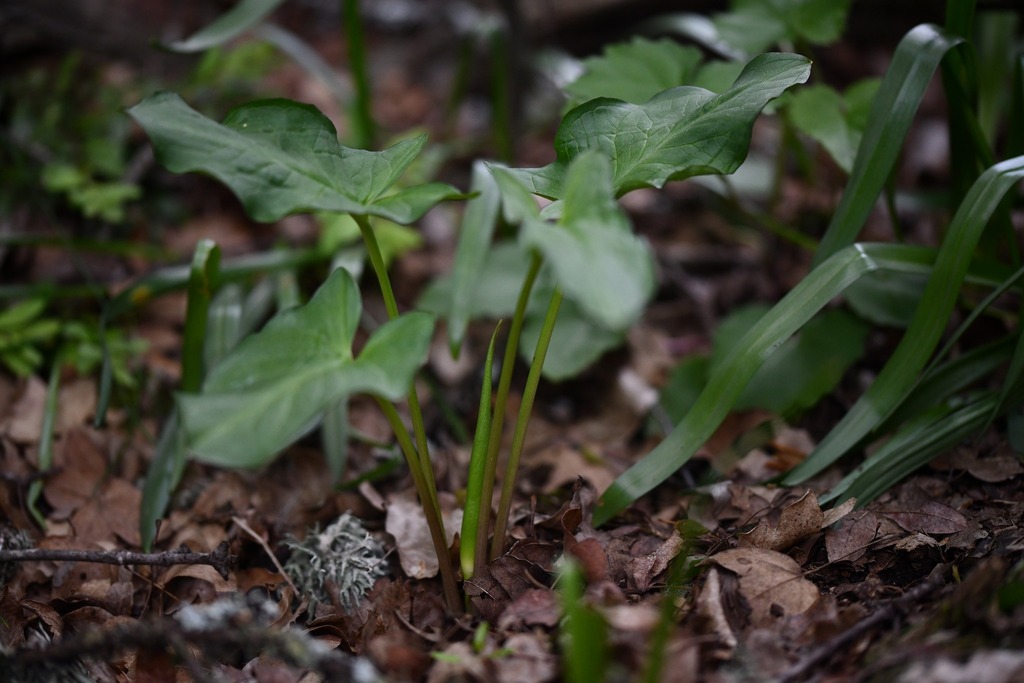
Arum cylindraceum
- Origin
- Europe
- Part used
- See detailed notebook
- Tradition
- Traditional ethnobotany
In the cool shade of Europe's woodlands, Arum cylindraceum unfurls its broad, spear-shaped leaves as soon as spring arrives. Old herbalists knew it chiefly for its dangers as much as for its rare external uses, since this plant belongs to the arum family, well known for its toxicity. Today it appears in our notebooks more as a botanical marker than as an everyday ally.
Traditional uses
Traditional external use on the skin
The fresh tuber, grated with great caution, is said to have been used very sparingly externally for skin conditions, in certain European folk traditions. This use remains anecdotal and poorly documented.
Occasional use in folk veterinary medicine
Some old sources mention an empirical veterinary use, though the precise methods and safety of the practice were never clearly established.
A marker plant in the woodlands
More than for its virtues, Arum cylindraceum was mostly recognized by foragers as a marker of damp, fertile soil, and as a plant to be carefully distinguished from similar edible species.
An old root use now abandoned
The tuber, once thoroughly dried and treated to remove the irritating crystals, is said to have once been turned into a kind of starch in certain poor regions, a use now completely abandoned due to the risks.
Before you use it
The whole plant, and particularly the red berries and fresh tuber, is toxic and contains calcium oxalate crystals that cause severe irritation of the oral and digestive mucous membranes. Never consume this plant in any form without appropriate treatment carried out by a competent professional, as homemade preparations carry a serious risk of poisoning. Always keep out of reach of children, as the attractive berries are a classic cause of accidental poisoning. Confusion with other arum-family plants or with young edible shoots is common and dangerous; when in doubt, consult a poison control center or healthcare professional.
The detailed notebook
- Prepared as a paste or decoction
- Traditional duration of use
- Known contraindications
- Related species and their uses
Where to find it
Partner herbalists — available with the detailed notebook.
Sources
PFAF