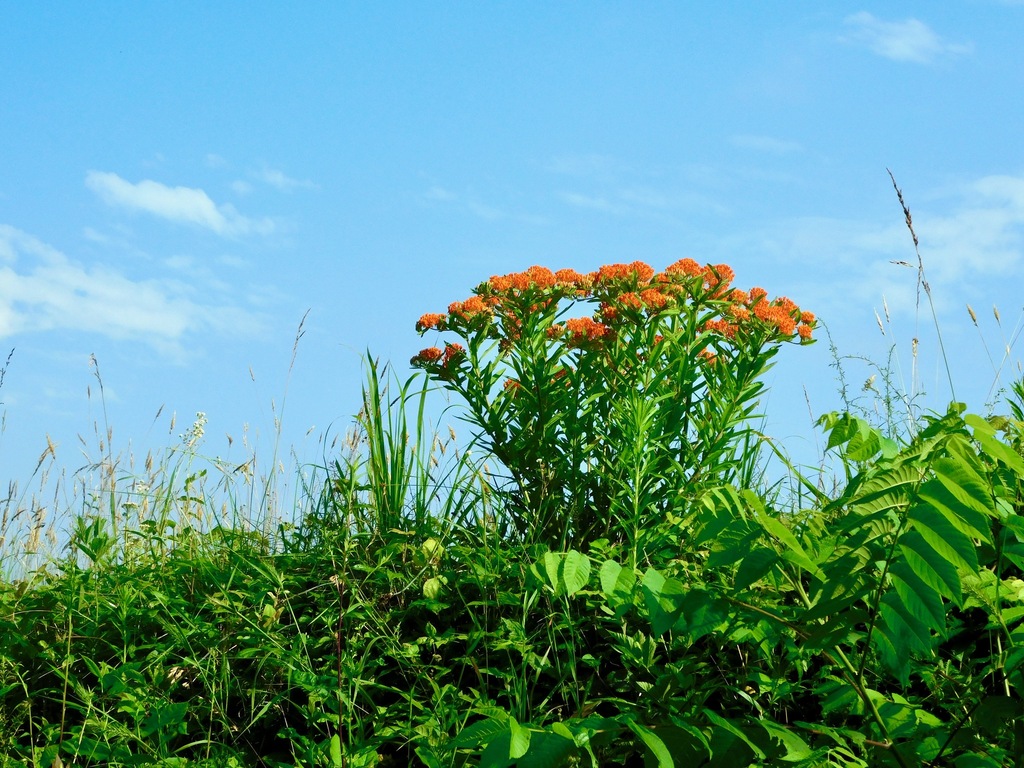
Asclepias tuberosa
- Origin
- North America
- Part used
- Seeds/fruits, Root
- Tradition
- Traditional ethnobotany
Named "pleurisy root" by North American settlers, Asclepias tuberosa was prized by several Indigenous peoples to help with chest ailments. Its tough root and orange flowers made it a familiar plant of gardens as well as of old herbalist notebooks. It belongs to the great milkweed family, several members of which share similar traditional uses as well as a common need for caution.
Traditional uses
Traditional support for the airways
The dried root was traditionally prepared as a decoction to help with respiratory ailments and chest discomfort, hence its common name "pleurisy root."
A traditional use as a diaphoretic
Indigenous healers and early American herbalists credited it with properties promoting sweating during feverish states.
A traditional local application
The crushed root or a poultice was sometimes used locally to soothe certain skin irritation, according to uses reported by Native American traditions.
A reported occasional traditional use
Some old sources mention a traditional use related to women's troubles, but this use remains poorly documented and is reported here for historical purposes only.
Before you use it
A plant containing cardiotonic glycosides: to be avoided in cases of heart trouble or associated medication, without the advice of a health professional. Discouraged during pregnancy and breastfeeding because of a traditional use related to women's health that is poorly documented and potentially risky. Do not use in children without the supervision of a qualified professional. The sap and certain parts of the plant can be irritating; avoid any prolonged contact with skin or mucous membranes without precaution.
The detailed notebook
- Prepared as a paste or decoction
- Traditional duration of use
- Known contraindications
- Related species and their uses
Where to find it
Partner herbalists — available with the detailed notebook.
Sources
PFAF, Wikipedia