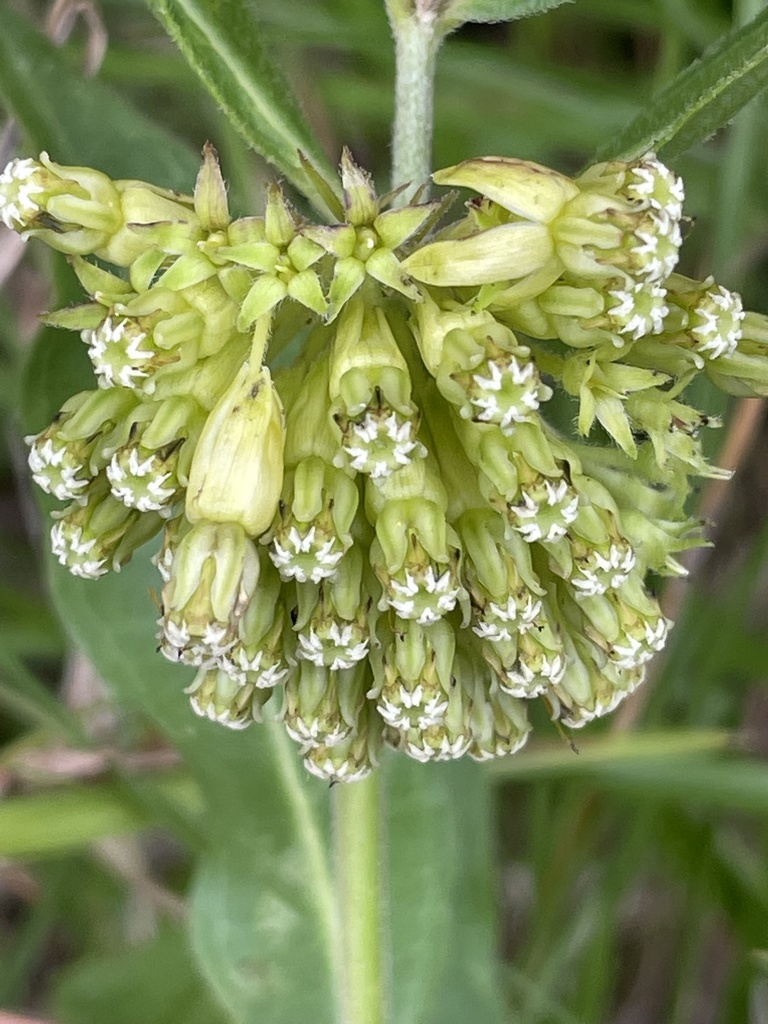
Asclepias viridiflora
- Origin
- North America
- Part used
- Root
- Tradition
- Traditional ethnobotany
Among the herbs of the great North American plains, green-flowered milkweed holds a quiet but recognized place among traditional healers. Less famous than its colorfully-flowered cousins, it was nonetheless consulted for its root, considered a remedy of the Native American pharmacopoeia. Its use, passed down orally from generation to generation, remains poorly documented by modern science today.
Traditional uses
Traditional support for the airways
The root was sometimes prepared as a decoction to help with respiratory ailments, according to certain Native American practices of the plains.
An old digestive use
Some tribes reported a use of the root to relieve temporary digestive trouble, as a mild preparation.
External application on the skin
The crushed root or a poultice was reportedly used locally to soothe certain skin conditions, according to oral tradition.
A plant of traditional plains remedies
Like other milkweeds, this plant went into blends or preparations considered tonic by traditional Indigenous herbalists.
Before you use it
Milkweeds contain cardiotonic glycosides and other potentially toxic compounds; unsupervised use is discouraged. Internal consumption is strongly discouraged without the advice of a health professional trained in medicinal plants. To be avoided in pregnant or breastfeeding women, as well as children, in the absence of sufficient safety data. Do not confuse it with other Asclepias species, whose toxicity varies greatly; rigorous botanical identification is essential.
The detailed notebook
- Prepared as a paste or decoction
- Traditional duration of use
- Known contraindications
- Related species and their uses
Where to find it
Partner herbalists — available with the detailed notebook.
Sources
PFAF, Wikipedia