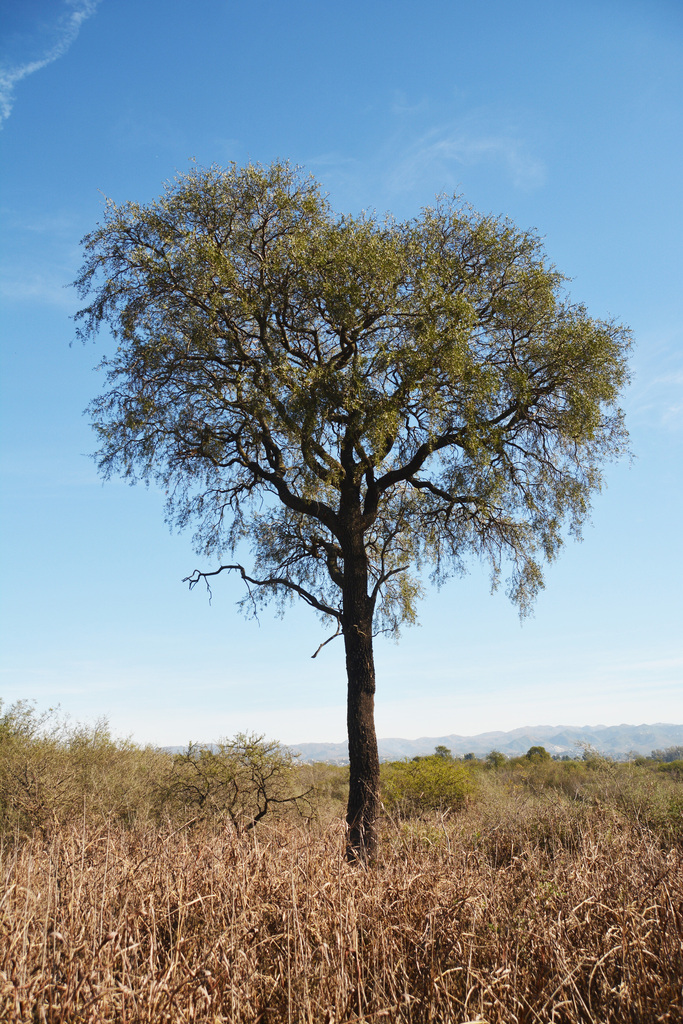
Aspidosperma quebracho-blanco
- Origin
- South America
- Part used
- See detailed notebook
- Tradition
- Traditional ethnobotany
Native to the dry forests and savannas of the South American Chaco, quebracho blanco owes its Spanish name to its legendary hardness: “quiebra hacha,” the wood that breaks the axe. Indigenous peoples of Argentina, Paraguay, and Bolivia traditionally used its bitter bark to support breath and respiration.
Traditional uses
Support for the breath
The bark was traditionally used in the Chaco regions to accompany respiratory discomfort and episodes of shortness of breath, particularly at altitude or during bronchial conditions.
A bitter tonic
Like many barks rich in bitter alkaloids, it was sometimes used in small amounts as a bitter tonic to stimulate appetite and digestion.
A traditional fever remedy
In South American popular pharmacopoeia, quebracho blanco was among the bitter barks used to accompany feverish states, in the manner of other barks of the continent.
An old circulatory support
Certain local traditions credited it with a role in generally supporting vitality, a use today poorly documented scientifically but reported by nineteenth-century herbalists.
What to know before use
Bark rich in alkaloids (including yohimbine and related compounds): never exceed occasional use supervised by a professional. Not recommended in cases of pregnancy, breastfeeding, in children, or in cases of hypertension, cardiac, or psychiatric conditions. Possible interactions with antihypertensive drugs, antidepressants, and other medications acting on the nervous system: seek medical advice before any use. Do not confuse with other species called 'quebracho' (red or colorado), whose properties differ.
The detailed notebook
- Prepared as a paste or decoction
- Traditional duration of use
- Known contraindications
- Related species and their uses
Where to find it
Partner herbalists — available with the detailed notebook.
Sources
PFAF