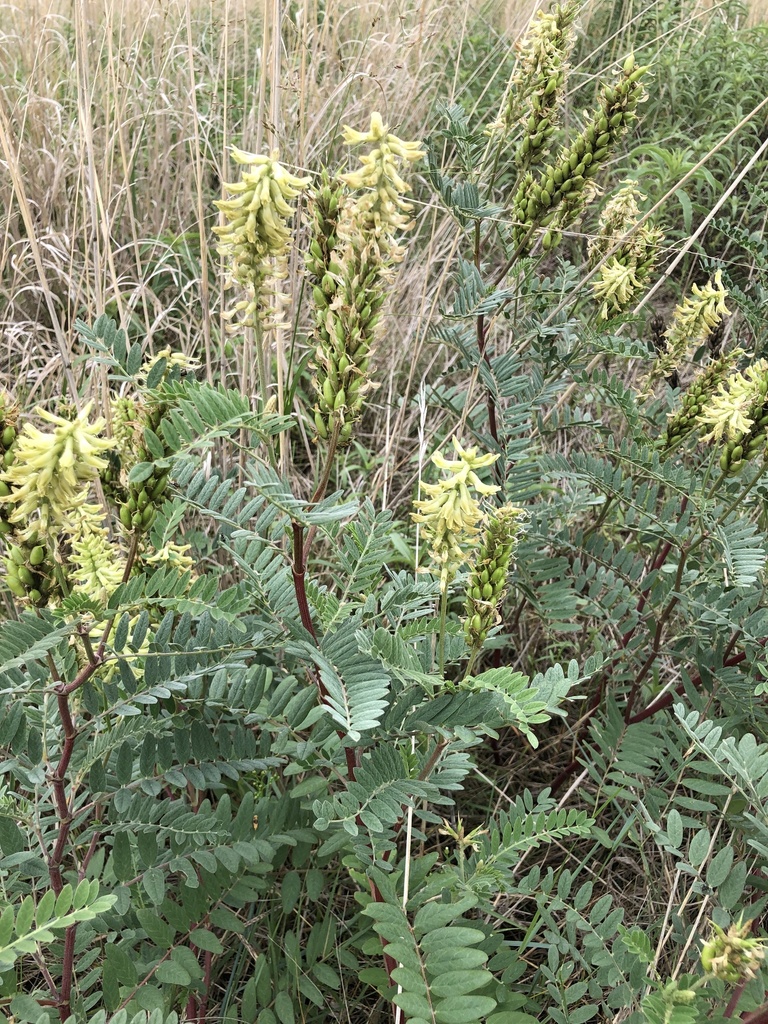
Astragalus canadensis
- Origin
- North America
- Part used
- Leaves, Root
- Tradition
- Traditional ethnobotany
Canada milkvetch was known to several Native American nations of the plains and eastern woodlands, who drew from its root a quiet strength attributed to deep-rooted plants. European settlers observed it with curiosity, never quite granting it the place of its Asian cousins. It remains today an unassuming plant, mentioned more often in herbalist notebooks than in major pharmacopoeias.
Traditional uses
Support for vitality
The root was traditionally used as a decoction as a fortifier, to help during periods of fatigue or convalescence.
Reinforcement against seasonal ailments
In the manner of other milkvetches, the root of this North American species was sometimes used as a course of treatment to help the body get through winter.
A soothing use of the foliage
The leaves, less well documented, were reportedly used as a mild infusion to help with difficult digestion in certain local traditions.
Occasional traditional uses
Some ethnobotanical sources report an occasional use of the plant for women's troubles, though the practice is neither widely established nor standardized.
Before you use it
The genus Astragalus includes toxic species (accumulating selenium or locoweed alkaloids); rigorous botanical identification is essential before any harvesting or use. Use discouraged for pregnant or breastfeeding women, for lack of sufficient safety data. Possible interactions with immunomodulatory or anticoagulant treatments; seek the advice of a health professional if undergoing treatment. Avoid prolonged self-prescription; reserve use for an occasional, supervised preparation.
The detailed notebook
- Prepared as a paste or decoction
- Traditional duration of use
- Known contraindications
- Related species and their uses
Where to find it
Partner herbalists — available with the detailed notebook.
Sources
PFAF, Wikipedia