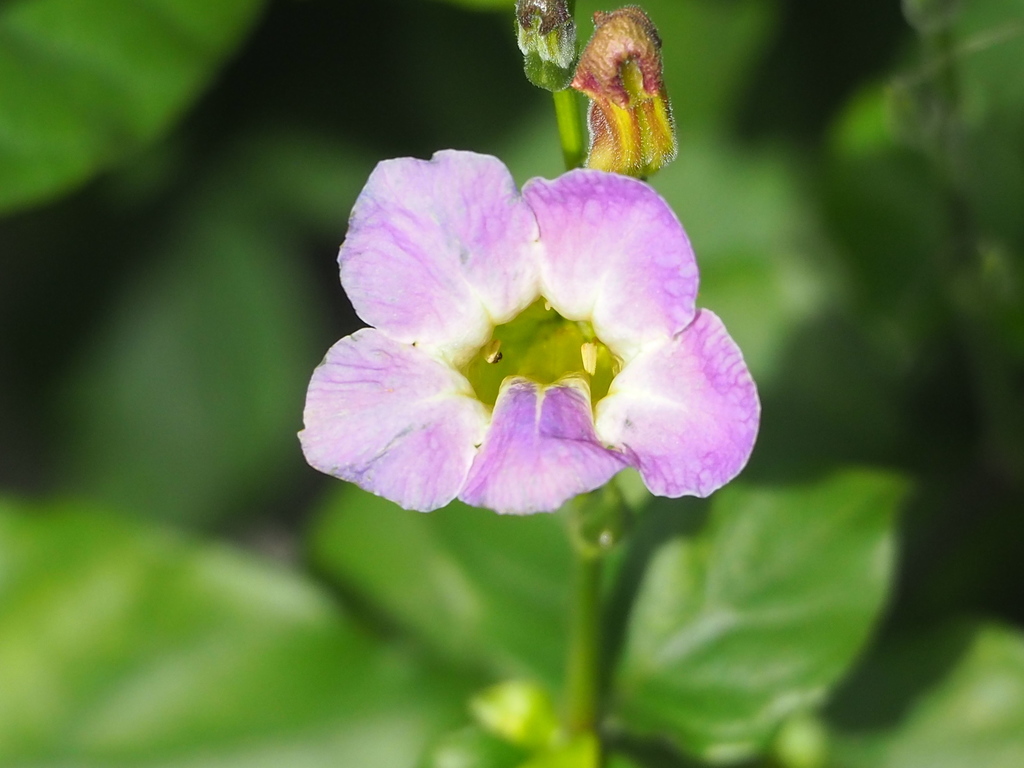
Asystasia gangetica
- Origin
- Asia
- Part used
- See detailed notebook
- Tradition
- Traditional ethnobotany
In the countryside of South and Southeast Asia, Asystasia gangetica grows as a discreet carpet at the foot of hedges and paths, often regarded as a mere creeping weed. Yet the ancients knew how to recognize a useful plant in it, long used in family remedies passed down from generation to generation. Its traditional use, though modest, attests to a fine knowledge of everyday herbs.
Traditional uses
Soothing skin irritation
Crumpled or crushed leaves were traditionally applied to the skin to soothe itching, stings, and minor irritation.
Relief of joint pain
As a poultice, the plant was used locally for its soothing effect on joints and painful areas.
Traditional use against digestive troubles
In certain Asian folk pharmacopeia, a light decoction was consumed to help with minor digestive troubles.
Traditional support for the respiratory tract
The plant occasionally appears in folk preparations intended to soothe coughing or mild respiratory conditions.
What to know before use
Traditional use poorly documented scientifically: it is recommended to consult a health professional before any internal use. Avoid use in pregnant or breastfeeding women, for lack of sufficient safety data. Do not use in young children without medical advice. Perform a preliminary skin test before any local application, due to possible individual sensitivities.
The detailed notebook
- Prepared as a paste or decoction
- Traditional duration of use
- Known contraindications
- Related species and their uses
Where to find it
Partner herbalists — available with the detailed notebook.
Sources
Wikipedia