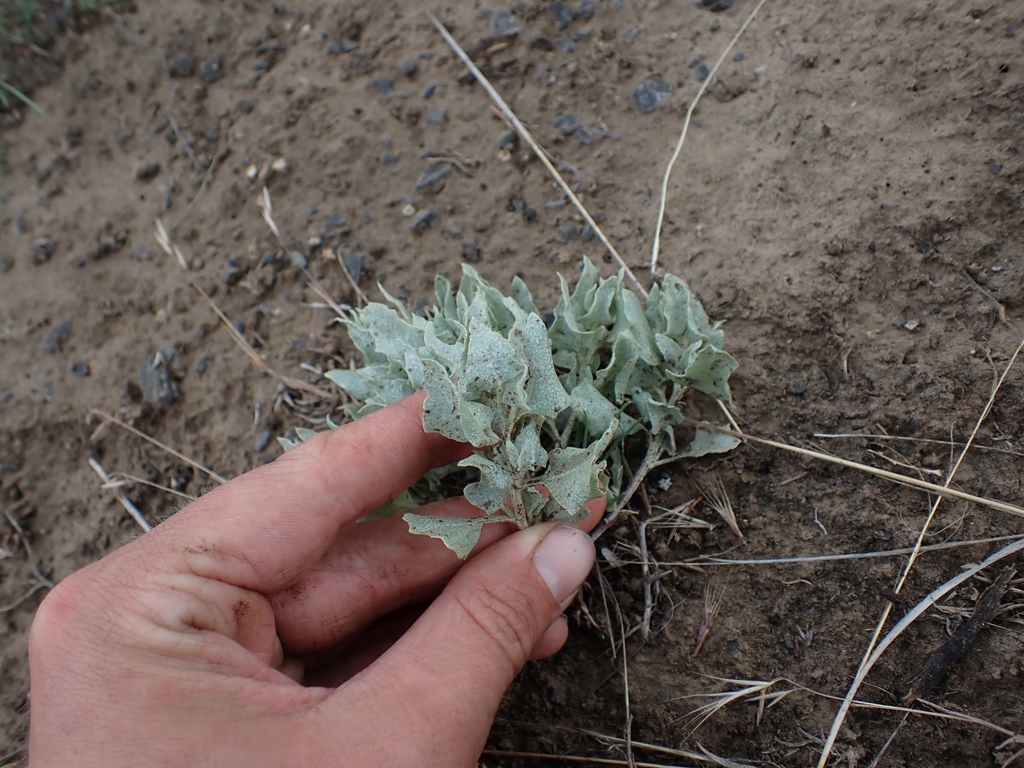
Atriplex argentea
- Origin
- North America
- Part used
- Root, Stem
- Tradition
- Traditional ethnobotany
Among the silvery saltbushes of the arid lands of North America, Atriplex argentea holds a quiet place in the traditional uses of the Indigenous peoples of the plains and desert zones. This salt-tolerant plant, recognizable by its silvery foliage, was called upon for its roots and stems in a few empirical preparations passed down orally. Its use, however, remains far less documented than that of other, more common saltbushes.
Traditional uses
Relief for digestive trouble
The root was sometimes prepared as a mild decoction by certain Indigenous communities to ease temporary digestive discomfort.
Traditional care for skin irritation
The crushed stems or a paste were reportedly applied locally to certain skin irritation, according to loosely formalized reported uses.
An empirical use for pain
A root decoction was occasionally used as an external application for its supposed soothing effect on localized pain.
A plant of saline lands
Like other saltbushes, the whole plant could be used as a subsistence food in arid regions where few other plants thrived.
Before you use it
The traditional uses of this particular species are poorly documented scientifically; great caution is called for before any use. Avoid any internal use without the advice of a qualified health professional, particularly because of the lack of toxicity data. Discouraged for pregnant or breastfeeding women, as well as children, for lack of sufficient safety data. Do not confuse it with other Atriplex species, whose uses and safety profiles can differ significantly.
The detailed notebook
- Prepared as a paste or decoction
- Traditional duration of use
- Known contraindications
- Related species and their uses
Where to find it
Partner herbalists — available with the detailed notebook.
Sources
PFAF, Wikipedia