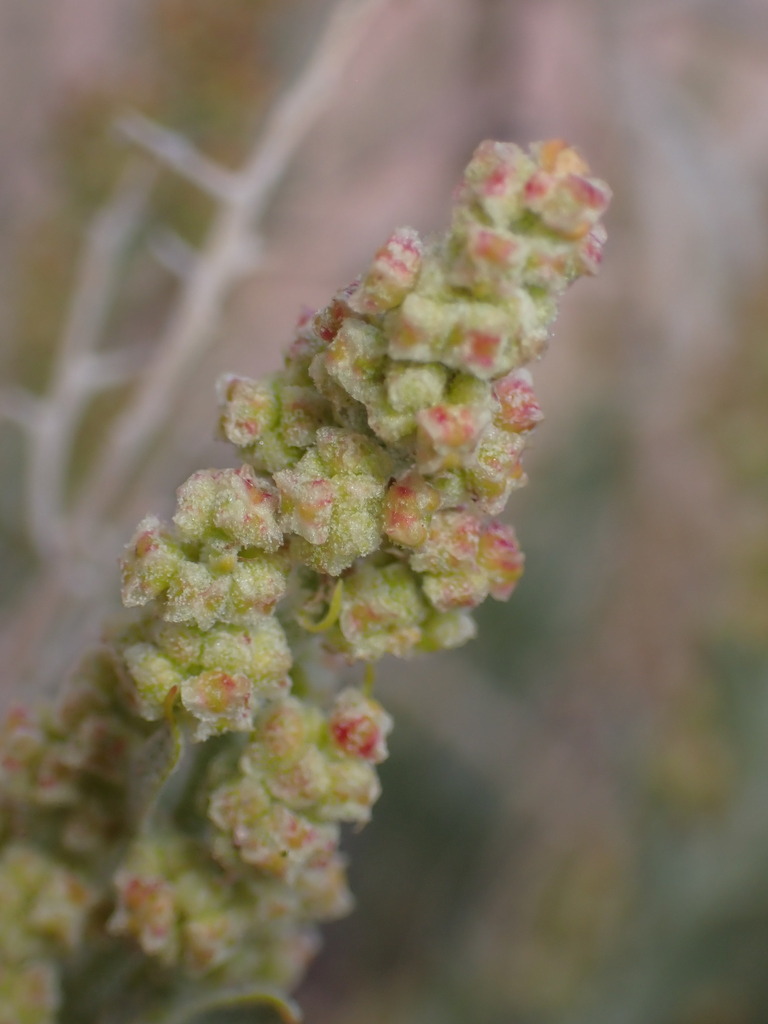
Atriplex nuttallii
- Origin
- North America
- Part used
- See detailed notebook
- Tradition
- Traditional ethnobotany
An unassuming shrub of the arid lands of the North American continent, Atriplex nuttallii — sometimes called Nuttall's saltbush — grows where few other plants venture, on the saline, alkaline soils of the great plains of the West. The Indigenous peoples of these regions had long known its food and household uses, considering it a precious resource of the arid lands.
Traditional uses
Seeds eaten as food
The seeds of Atriplex nuttallii were traditionally harvested, dried, and ground into flour by certain plains tribes to be added to porridges or flatbreads.
Ashes used as a cleaning agent
Rich in alkaline compounds because of their saline habitat, the burned parts of the plant were sometimes used to make a rudimentary soap or as a traditional cleaning agent.
Leaves in a mild traditional use
In certain local traditions, the young leaves were eaten cooked as a wild vegetable, in the manner of spinach, and associated with a gentle digestive use.
External application for irritation
A reported traditional use mentions the application of crushed leaves as a poultice on minor skin irritation, though this practice remains poorly documented in historical sources.
Before you use it
This plant grows in saline soils and can accumulate minerals and oxalates in variable concentrations; excessive consumption is discouraged. A traditional use poorly documented by modern scientific literature: caution is called for, particularly for any prolonged internal use. Discouraged without the advice of a health professional for pregnant or breastfeeding women, as well as young children. Do not confuse it with other Atriplex species or similar plants growing in polluted environments, because of the risk of accumulating soil contaminants.
The detailed notebook
- Prepared as a paste or decoction
- Traditional duration of use
- Known contraindications
- Related species and their uses
Where to find it
Partner herbalists — available with the detailed notebook.
Sources
PFAF, Wikipedia