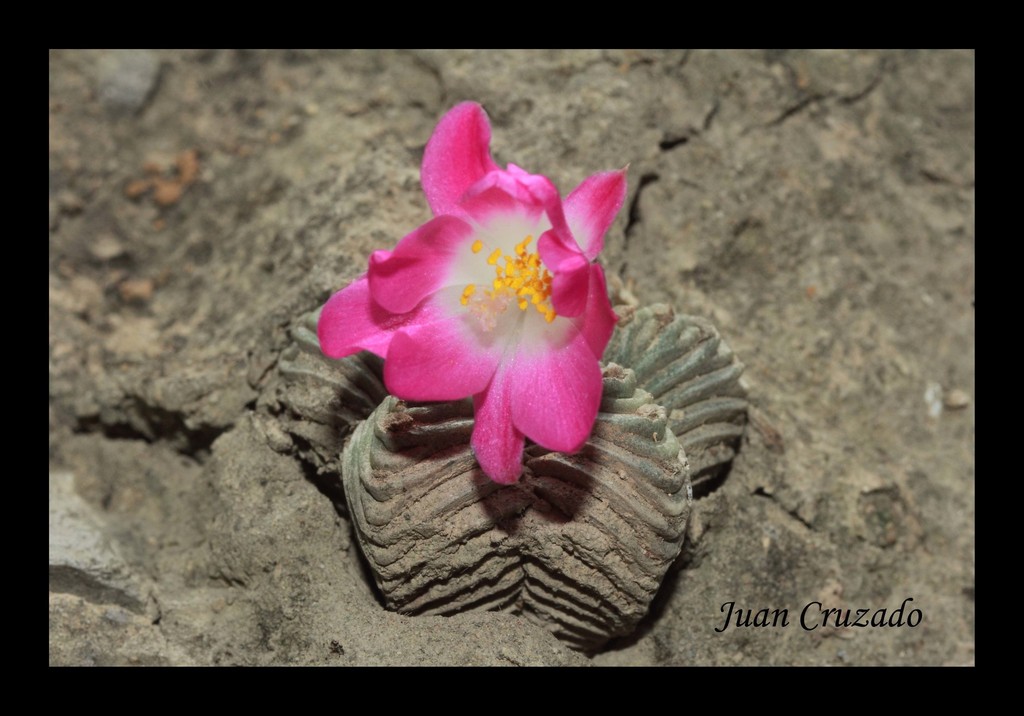
Aztekium
- Origin
- North America
- Part used
- See detailed notebook
- Tradition
- Traditional ethnobotany
Aztekium is a genus of miniature cacti, rare and extremely slow-growing, discovered in the 20th century in the arid mountains of Nuevo León, Mexico. Prized more for their sculptural shape evoking the motifs of pre-Columbian temples than for any medicinal use, these plants have never held a notable place in traditional herbalism. They remain mainly an object of botanical curiosity and collection.
Traditional uses
An object of botanical reverence
Although poorly documented in classic ethnobotanical sources, Aztekium is sometimes mentioned as a curiosity linked to the local traditions of northern Mexico, more for its rarity and geometric shape than for any proven use.
A prized collector's plant
Since its discovery, this cactus has been grown mainly by succulent enthusiasts for its shape recalling Mesoamerican bas-reliefs, with no recognized traditional preparation or consumption use.
A reference to ancient civilizations
Its very name, evoking the Aztecs, reflects a strong cultural imagination around this plant, far more than a therapeutic practice passed down from generation to generation.
Before you use it
No reliable traditional internal or external use is documented for Aztekium; any improvised ingestion or preparation is discouraged in the absence of safety data. The genus Aztekium is classified among rare, endangered cacti, protected under the CITES convention: its wild harvesting is prohibited and its cultivation must come from legal horticultural sources. In the absence of established toxicological information, do not consume this plant or use it for medicinal purposes without the advice of a qualified professional. Do not confuse it with other Mexican cacti sometimes traditionally used (such as peyote), as Aztekium does not belong to the same family of uses.
The detailed notebook
- Prepared as a paste or decoction
- Traditional duration of use
- Known contraindications
- Related species and their uses
Where to find it
Partner herbalists — available with the detailed notebook.
Sources
PFAF