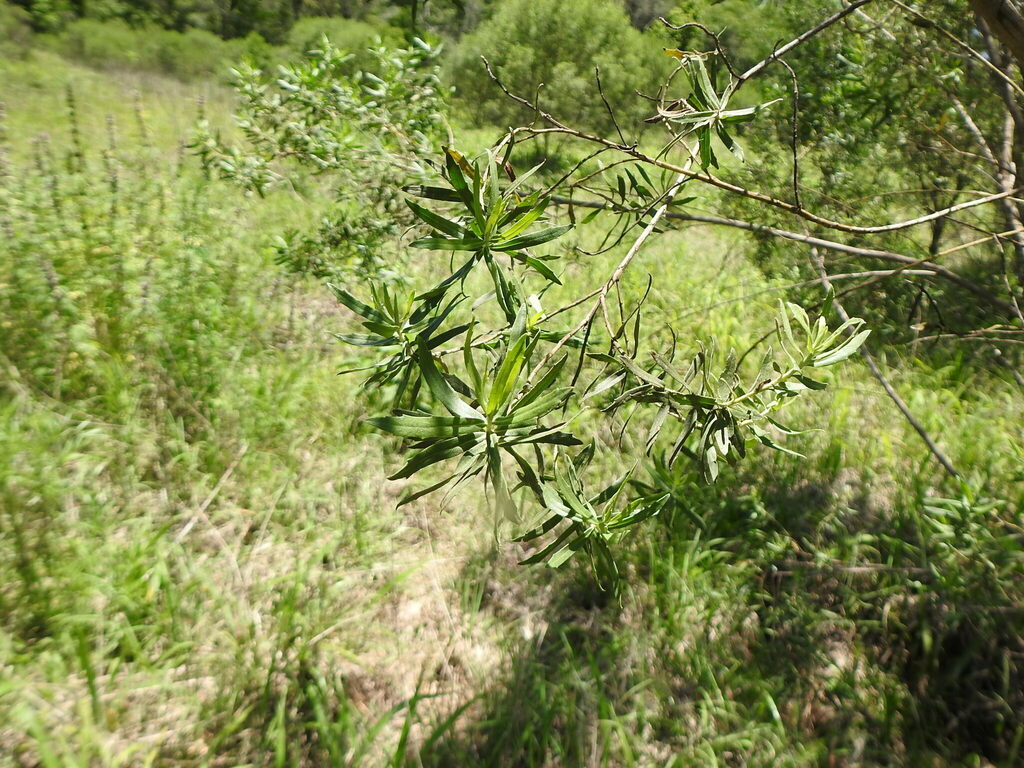
Baccharis dracunculifolia
- Origin
- South America
- Part used
- See detailed notebook
- Tradition
- Traditional ethnobotany
A resinous shrub of the cerrado and fields of southern Brazil, Baccharis dracunculifolia is best known as the mother plant of green propolis, so fond are bees of its fragrant resin. Rural Brazilian communities call it “alecrim do campo” and have long credited it with digestive and soothing virtues.
Traditional uses
Support for digestion
The leaves were traditionally infused to accompany slow digestion and relieve heaviness after meals.
Relief of mild inflammation
The resin and leaves, rich in aromatic compounds, have a traditional reputation for soothing mild inflammation of the mouth and throat.
A traditional bitter tonic
In Brazilian popular pharmacopoeia, the plant is among the bitters used to stimulate liver function and appetite.
A healing external use
Compresses made from infused leaves or diluted resin were applied to minor wounds or skin irritation, in keeping with the antiseptic reputation of the resin gathered by bees.
What to know before use
Traditional use in humans is poorly documented scientifically: seek a healthcare professional's advice before any internal use. Avoid in pregnant or breastfeeding women, due to insufficient safety data. Do not use in young children. People allergic to propolis or to plants of the Asteraceae family: caution, risk of cross-reaction.
The detailed notebook
- Prepared as a paste or decoction
- Traditional duration of use
- Known contraindications
- Related species and their uses
Where to find it
Partner herbalists — available with the detailed notebook.
Sources
PFAF