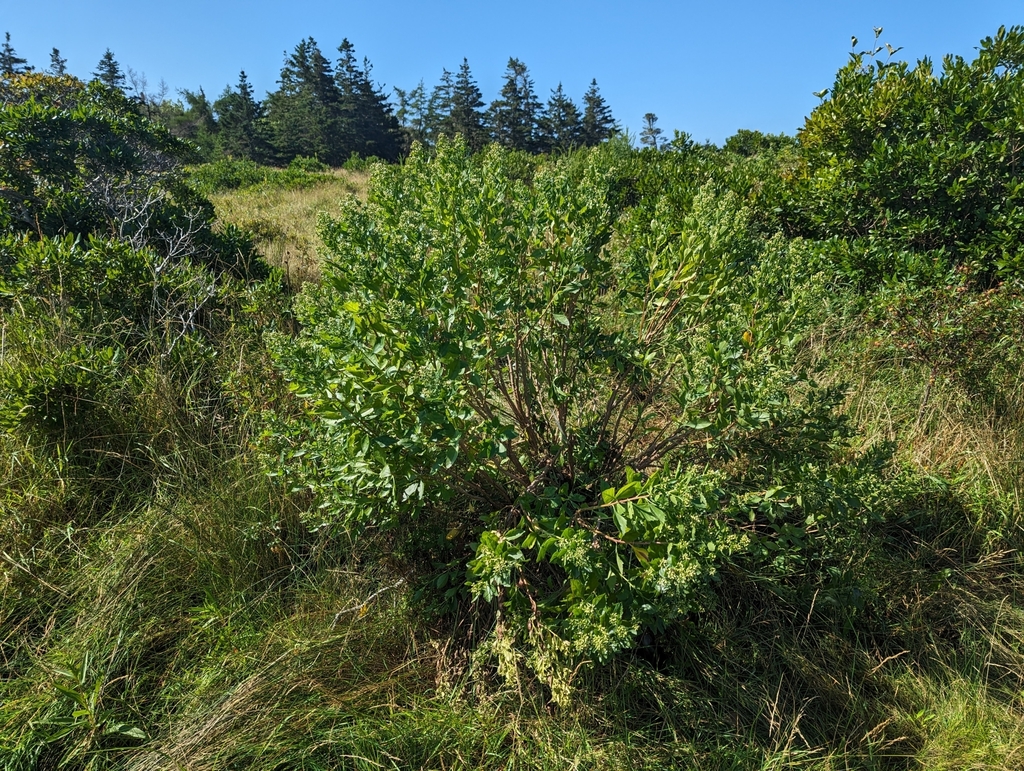
Baccharis halimifolia
- Origin
- North America
- Part used
- Seeds/fruits
- Tradition
- Traditional ethnobotany
Baccharis halimifolia, a shrub of the Atlantic shores of North America, grows where salt permeates the air and the soil. Coastal peoples knew it mainly as a plant of the dunes and salt marshes, noted more for its tenacious presence than for any well-established use in traditional herbalism. Its common names, "groundsel bush" or "sea myrtle," reflect its anchoring in coastal landscapes rather than a recognized pharmacopoeia.
Traditional uses
A plant of coastal zones
In certain local North American traditions, the seeds and fruits of this shrub were reportedly mentioned only marginally, with no solid documentation on a precise use.
A landmark plant of the dunes
Baccharis halimifolia mainly served as a landmark for coastal communities, marking the boundary between salt marsh and dry land, rather than as a healing ingredient.
A role in coastal ecosystems
Its silvery foliage and downy seeds made it a plant noted for its role in stabilizing sandy soils, more than for any medicinal properties.
Before you use it
This species is poorly documented in traditional herbalism, and certain parts of the plant are considered toxic to livestock, which calls for great caution. Do not consume without the advice of a qualified professional, as internal use is neither sufficiently established nor safe. Avoid any use in pregnant or breastfeeding women, as well as children, for lack of data. Baccharis halimifolia is classified as an invasive species in several regions, particularly in Europe; its harvesting and cultivation may be regulated there.
The detailed notebook
- Prepared as a paste or decoction
- Traditional duration of use
- Known contraindications
- Related species and their uses
Where to find it
Partner herbalists — available with the detailed notebook.
Sources
Wikipedia