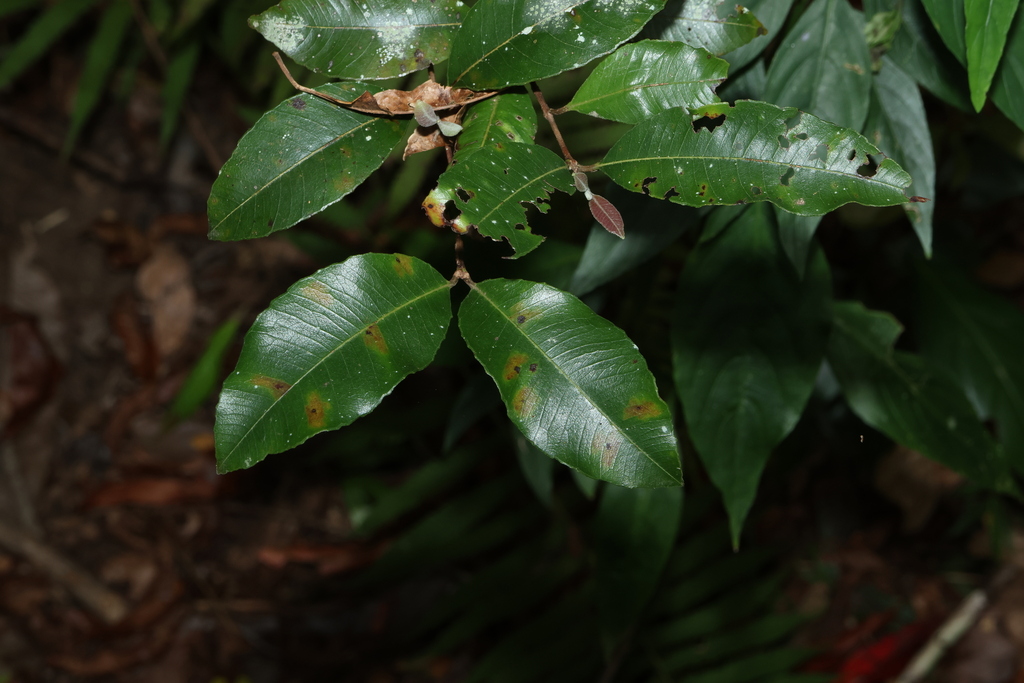
Backhousia citriodora
- Origin
- Oceania
- Part used
- Leaves
- Tradition
- Traditional ethnobotany
Native to the coastal forests of Queensland, Australia, Backhousia citriodora — which settlers soon called "lemon myrtle" — was known to Aboriginal peoples long before the arrival of Europeans, who in turn adopted it for its intense lemon scent and aromatic flavor. Its leaves, crushed between the fingers, release a fragrance so pure that it was long used as much in cooking as in home remedies.
Traditional uses
A soothing infusion after meals
The dried leaves were traditionally infused to accompany digestion, in the manner of a lemony herbal tea taken after a meal.
Inhalation for congestion
The essential oil extracted from the leaves, rich in citral, was traditionally inhaled to clear the airways during seasonal chills.
Skin use in diluted preparation
Used externally in very diluted form, lemon myrtle was traditionally employed for its purifying virtues on the skin, particularly for minor irritations.
An everyday aromatic leaf
Chewed or infused fresh, the leaf was used by Aboriginal Australians as a refreshing tonic and to scent the breath.
Before you use it
Backhousia citriodora essential oil is very rich in citral and can strongly irritate the skin and mucous membranes if not properly diluted: the advice of a qualified professional is recommended before any use. Use is discouraged during pregnancy or breastfeeding, and in young children, without prior medical advice. Never ingest the pure essential oil; interactions with certain medications cannot be ruled out. In case of sensitive skin or an allergic background, a preliminary skin test is advised before any application, even diluted.
The detailed notebook
- Prepared as a paste or decoction
- Traditional duration of use
- Known contraindications
- Related species and their uses
Where to find it
Partner herbalists — available with the detailed notebook.
Sources
PFAF, Wikipedia