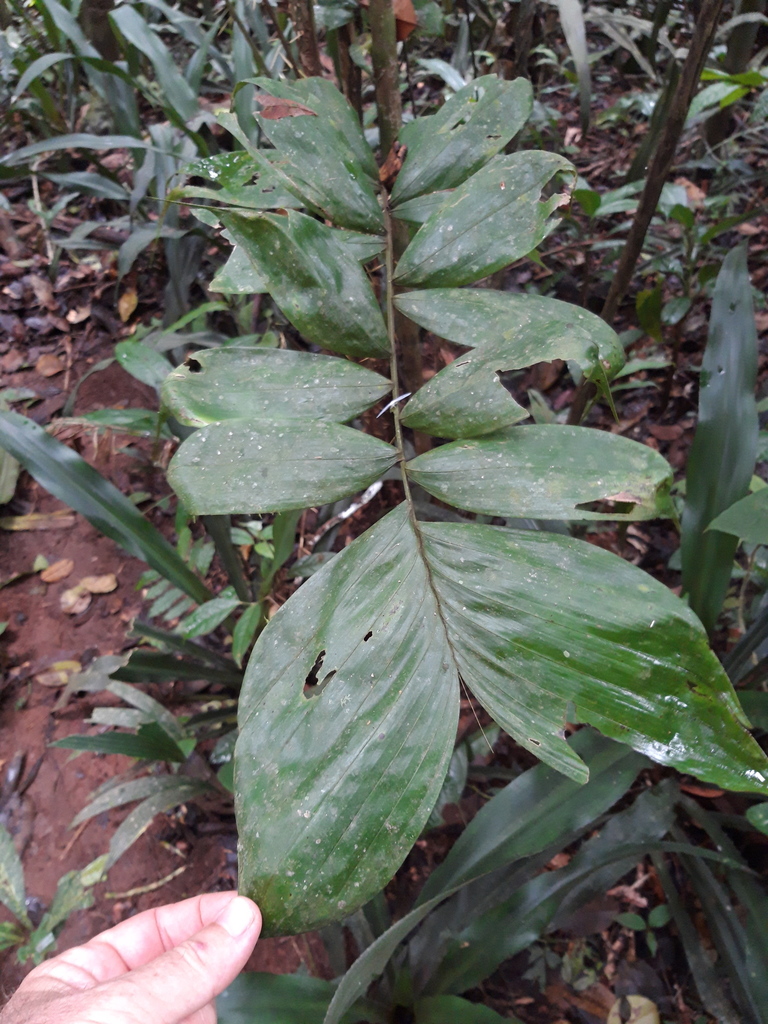
Bactris maraja
- Origin
- North America
- Part used
- See detailed notebook
- Tradition
- Traditional ethnobotany
Bactris maraja is a small spiny palm growing in damp undergrowth, known to the peoples of Amazonia and tropical America for its tart fruits and its quiet uses in village pharmacopoeia. Less famous than its larger cousins, it nonetheless holds a modest but steady place in herbalist notebooks passed down orally along the rivers. Its fruit, sap, and roots have, according to local traditions, nourished both bodies and makeshift remedies.
Traditional uses
Fruits used as a digestive tonic
The tart fruits of Bactris maraja were traditionally eaten fresh or as juice to support digestion after hearty meals, according to uses reported by certain Amazonian communities.
A root decoction for fever
The root, as a decoction, was reportedly traditionally used to help with feverish episodes, as part of folk remedies passed down orally rather than documented scientifically.
Fruit as a traditional food source
Rich in vitamin C according to oral tradition, the fruit was eaten raw or turned into a fermented drink, contributing to the seasonal diet of forest populations.
Sap used on minor wounds
The palm's sap was reportedly applied locally, empirically, to minor wounds or stings, according to reported but loosely formalized practices.
Before you use it
The palm's spines can cause deep wounds and local infections; handling them requires caution. Internal use (particularly the root decoction) remains poorly documented scientifically: it is recommended to consult a health professional before any use. No reliable data exists regarding use in pregnant or breastfeeding women, or in children: avoid as a precaution. Do not confuse it with other species of the genus Bactris with different uses and compositions.
The detailed notebook
- Prepared as a paste or decoction
- Traditional duration of use
- Known contraindications
- Related species and their uses
Where to find it
Partner herbalists — available with the detailed notebook.
Sources
PFAF