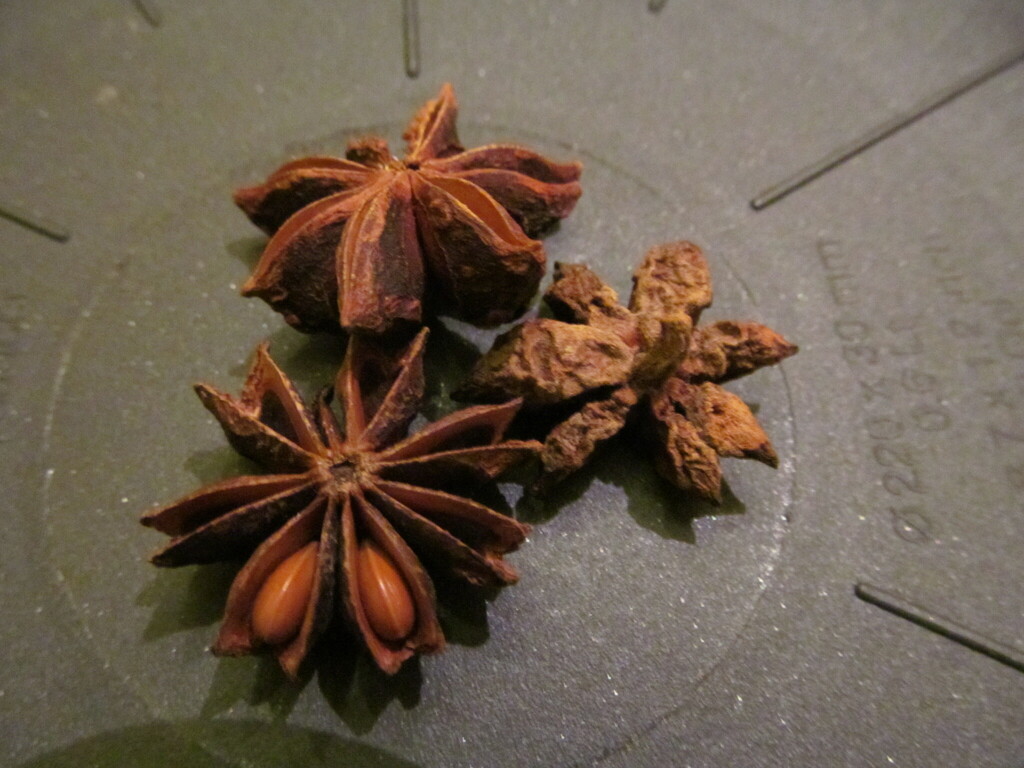
Star Anise
- Origin
- Asia
- Part used
- Leaves
- Tradition
- Traditional ethnobotany
Chinese star anise, whose star-shaped fruit has for centuries adorned Asia's spice counters, was long prized by herbalists of the Celestial Empire for its digestive and aromatic virtues. Introduced to Europe via the trade routes, star anise holds a singular place between cooking and traditional pharmacopeia. It should, however, be carefully distinguished from its cousin Japanese star anise (Illicium anisatum), which is severely toxic and sometimes confused with it.
Traditional uses
Soothing digestive troubles
Traditionally, the fruit and leaves of star anise were infused to relieve bloating, digestive spasms, and aid digestion after meals.
Respiratory support
Star anise herbal teas were used in Chinese tradition to clear the bronchi and help with seasonal colds.
Promoting relaxation
A light leaf infusion was sometimes taken in the evening, in folk uses, for its soothing scent and supposed calming virtues.
Freshness of breath
Chewing or infusing the fruit was an old practice to scent the breath after meals, inherited from a blend of culinary and pharmacopeial uses.
What to know before use
Never confuse with Japanese star anise (Illicium anisatum), which is toxic and responsible for serious poisoning; use only fruit or leaves certified as Illicium verum. Not recommended for pregnant or breastfeeding women, as well as young children, due to the lack of safety data and compounds potentially active on a hormonal level. Prolonged or high-dose use can lead to neurological disorders; keep to modest, occasional amounts. Seek the advice of a health professional if undergoing medication treatment, particularly for possible interactions with anticoagulants or sedatives.
The detailed notebook
- Prepared as a paste or decoction
- Traditional duration of use
- Known contraindications
- Related species and their uses
Where to find it
Partner herbalists — available with the detailed notebook.
Sources
PubMed, Wikipedia