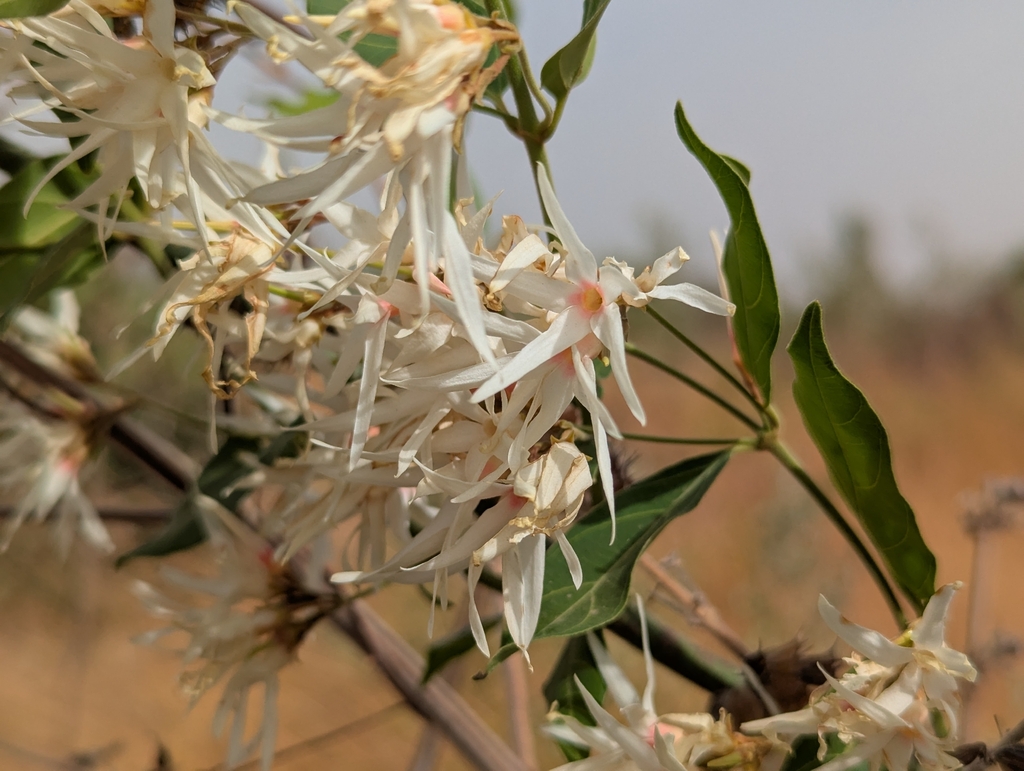
Baissea multiflora
- Origin
- Africa
- Part used
- See detailed notebook
- Tradition
- Traditional ethnobotany
A vine of the savannas and open woodlands of West Africa, Baissea multiflora has long been known to traditional practitioners for its bitter stems and roots. The ancients ranked it among the plants of strength, used to support a body weakened by fever or fatigue.
Traditional uses
Support in cases of fever
The bark or root decoction was traditionally drunk in West Africa to help with feverish episodes and support convalescence.
Relief of joint pain
The crushed stems or decoction were applied as rubs or drunk to relieve muscle and joint pain, according to local traditional pharmacopeia.
A bitter digestive tonic
The bitterness of the bark was used in small amounts as a bitter tonic, believed to stimulate the appetite and digestive comfort.
Traditional uses related to fertility
Certain traditions report a use of the plant related to women's troubles, an area to be considered with particular caution and never without the advice of a professional.
What to know before use
A plant belonging to the Apocynaceae family, reputed to contain potentially toxic alkaloids: never self-prescribe without the advice of a qualified professional. Use not recommended for pregnant or breastfeeding women, due to traditional uses related to women's health that may indicate hormonal activity. To be avoided in children, for lack of sufficient safety data. Do not combine with other treatments without discussing it with a doctor, due to a poorly documented risk of interaction.
The detailed notebook
- Prepared as a paste or decoction
- Traditional duration of use
- Known contraindications
- Related species and their uses
Where to find it
Partner herbalists — available with the detailed notebook.
Sources
PFAF