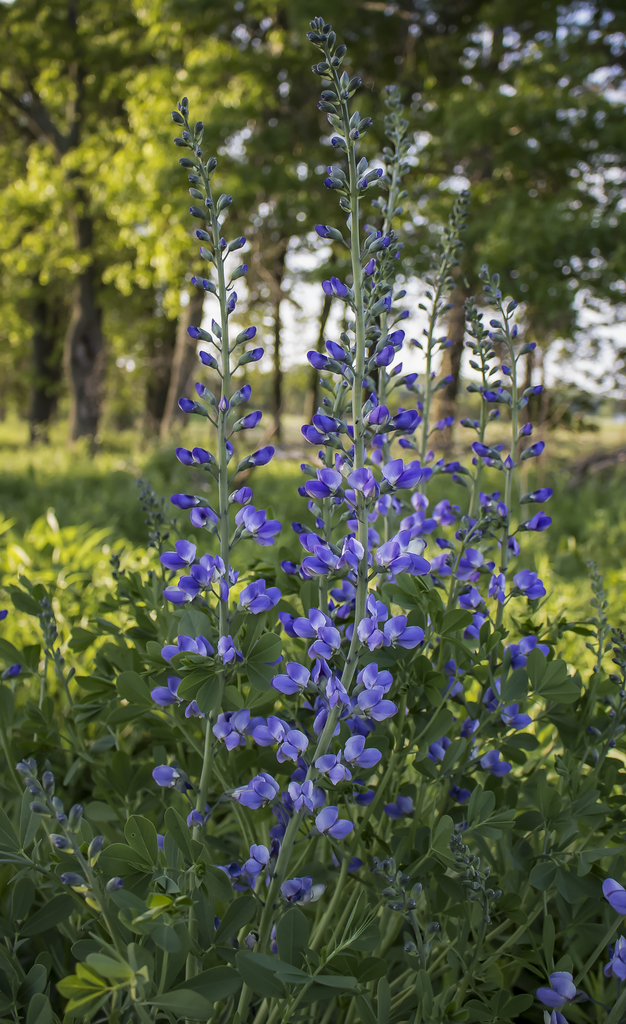
Baptisia australis
- Origin
- North America
- Part used
- Root
- Tradition
- Traditional ethnobotany
Baptisia australis, or wild indigo, grew in the prairies and wooded edges of eastern North America, where Native American healers had long known the properties of its root. Its name recalls the blue dye once drawn from its leaves, but it was the root that caught the attention of traditional herbalists. A plant both respected and handled with circumspection, it holds a particular place in old herbalist notebooks.
Traditional uses
Traditional throat care
The root decoction was traditionally used as a gargle to soothe irritated throats and mouth inflammation.
Applications on irritated skin
Used externally, root-based preparations were applied locally to certain skin conditions, in North American folk tradition.
Traditional support for the body's defenses
Some herbalist traditions credited very low doses of root with a role in occasionally supporting the body during seasonal colds.
An old use for digestive trouble
The root was sometimes used in very small amounts in traditional digestive preparations, always with great caution because of its recognized strength.
Before you use it
A plant to be handled with great caution: the root of Baptisia australis contains alkaloids and can prove toxic at excessive doses. Internal use strongly discouraged without the advice of a health professional or an experienced herbalist. Strictly forbidden for pregnant or breastfeeding women, as well as children. Do not combine with other treatments without medical advice, as interactions cannot be ruled out.
The detailed notebook
- Prepared as a paste or decoction
- Traditional duration of use
- Known contraindications
- Related species and their uses
Where to find it
Partner herbalists — available with the detailed notebook.
Sources
PFAF, Wikipedia