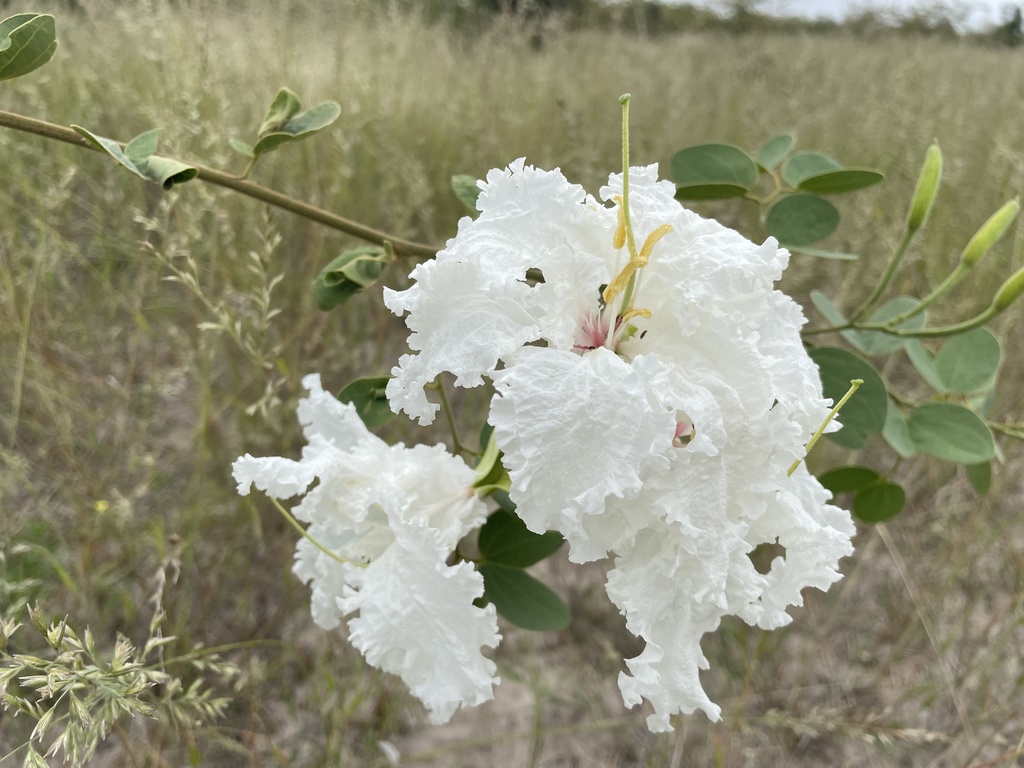
Bauhinia petersiana
- Origin
- Africa
- Part used
- Seeds / fruit
- Tradition
- Traditional ethnobotany
A shrub of the southern African savannas, Bauhinia petersiana has been known to local populations for generations for its pods and seeds, long incorporated into the food uses and traditional pharmacopeia of rural communities. Ancient herbalists of Southern Africa rank it among the useful plants of the bush, valued as much for their hardiness as for their reported virtues.
Traditional uses
Traditional digestive support
Roasted seeds or fruit were traditionally eaten to help digestion and soothe mild intestinal discomfort, according to uses reported by Southern African communities.
Seeds as a supplementary food
During periods of famine, roasted Bauhinia petersiana seeds were used as a food supplement, sometimes ground into a coarse flour or eaten as they were.
A traditional use on minor skin conditions
Certain preparations made from crushed seeds are said to have been applied locally to the skin in oral tradition, although this use remains little documented by reliable written sources.
A traditional tonic
The occasional consumption of the seeds was associated, in certain local traditions, with an idea of vitality and general bodily resistance.
What to know before use
Raw or unprepared seeds may present toxicity; traditional preparation (roasting, cooking) is generally necessary before any consumption. Use not sufficiently documented in pregnant or breastfeeding women: to be avoided as a precaution. Do not give to young children without the advice of a health professional competent in herbal medicine. In the absence of reliable data on drug interactions, seek medical advice before any prolonged or therapeutic use.
The detailed notebook
- Prepared as a paste or decoction
- Traditional duration of use
- Known contraindications
- Related species and their uses
Where to find it
Partner herbalists — available with the detailed notebook.
Sources
PFAF, Wikipedia