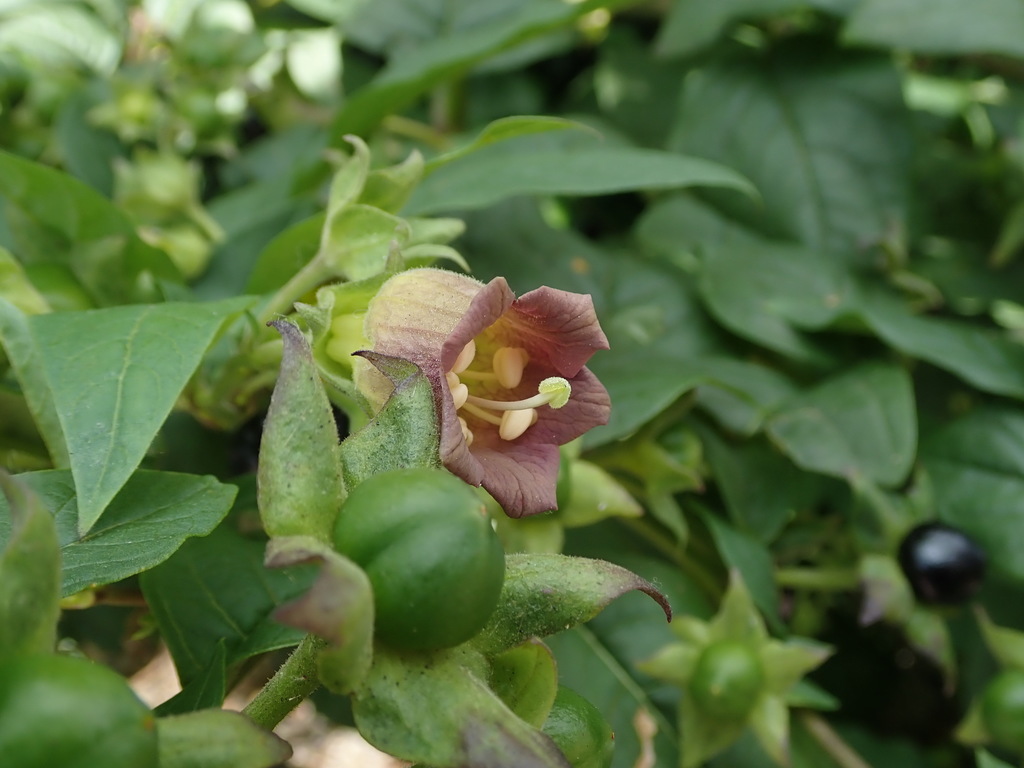
belladonna
- Origin
- Europe
- Part used
- See detailed notebook
- Tradition
- Traditional ethnobotany
Belladonna was, since antiquity, one of the most feared and respected plants among European herbalists. Its very name, full of contradiction — 'beautiful lady' and deadly poison — reflects the ambivalence with which our ancestors regarded it. Reserved for the expert hands of apothecaries, it occupies a place apart in the memory of medicinal herbs, somewhere between remedy and venom.
Traditional uses
Old-time plasters and ointments
Apothecaries of old sometimes used external preparations based on belladonna to relieve certain localized pains, under strict control due to its toxicity.
Dilating the pupil
Historically, women of the Italian Renaissance used an extract of the berries to dilate their pupils, considered more alluring this way, hence the plant's name.
The old apothecaries' antispasmodic
Traditional European medicine reports an old use of belladonna against certain digestive spasms, always reserved for a pharmaceutical preparation dosed with great precision.
The witches' and poisoners' plant
Associated in folk traditions with occult practices and poisons, belladonna holds a powerful symbolic place in the stories and beliefs of medieval Europe.
Before you use it
An extremely toxic plant, potentially fatal even at low doses: any part of the plant can cause serious poisoning. Formally forbidden for pregnant or breastfeeding women, children, and self-medication in any form. Never eat the berries, often mistaken for edible fruit, particularly dangerous for children. Any use can only be conceived through a standardized pharmaceutical preparation, under strict medical supervision; no household use should ever be considered.
The detailed notebook
- Prepared as a paste or decoction
- Traditional duration of use
- Known contraindications
- Related species and their uses
Where to find it
Partner herbalists — available with the detailed notebook.
Sources
Wikipedia