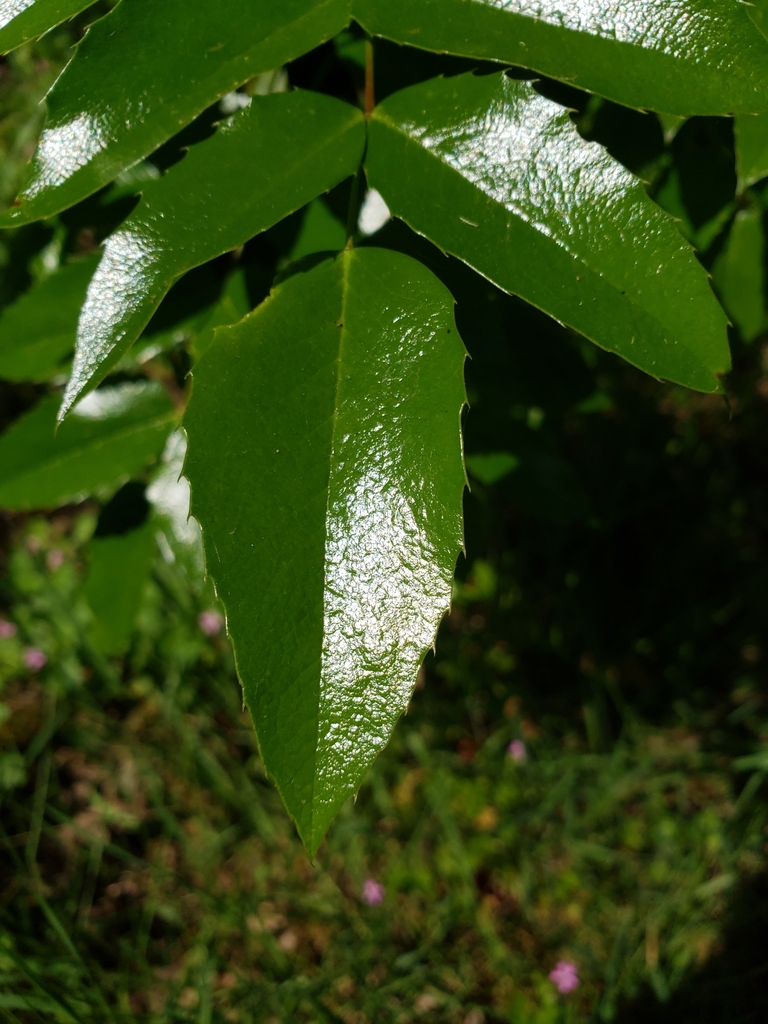
Berberis aquifolium
- Origin
- North America
- Part used
- See detailed notebook
- Tradition
- Traditional ethnobotany
On the wooded foothills of the North American West, Pacific Native Americans had long known the properties of this shrub with glossy foliage and tart berries. Introduced to Europe in the 19th century, Oregon grape, as it is also called, gradually became part of Western traditional pharmacopoeias for skin and liver care.
Traditional uses
Traditional support for problem skin
The root bark was traditionally used externally to help skin prone to psoriasis or eczema, according to uses reported by 19th-century herbalists.
A traditional bitter liver tonic
Considered a bitter plant, barberry root was traditionally used to stimulate digestive function and support liver drainage in North American folk uses.
A remedy of the first peoples of the Pacific
Several Indigenous peoples of the Pacific coast used the root as a decoction as a general remedy, particularly for digestive trouble and as a spring tonic.
A traditional use as a mouthwash
A diluted decoction was sometimes used as a mouthwash, in folk tradition, for its bitter, astringent taste associated with a feeling of freshness.
Before you use it
Discouraged during pregnancy and breastfeeding because of the presence of berberine, an alkaloid with reported uterotonic effects. Do not use in young children without the advice of a health professional. Berberine can interact with several medications (anticoagulants, diabetes treatments, certain antibiotics): seek advice before any prolonged use. Avoid prolonged internal use without supervision, because of the risk of digestive and liver irritation at a high dose.
The detailed notebook
- Prepared as a paste or decoction
- Traditional duration of use
- Known contraindications
- Related species and their uses
Where to find it
Partner herbalists — available with the detailed notebook.
Sources
PFAF