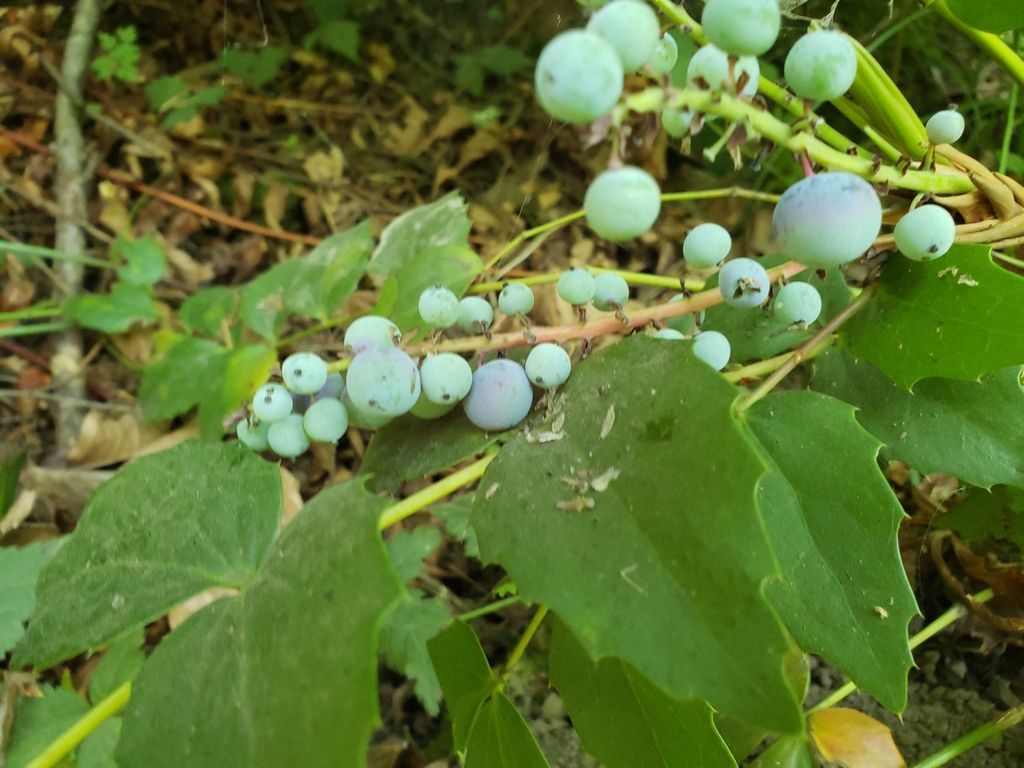
Berberis nervosa
- Origin
- North America
- Part used
- Seeds/fruits, Root
- Tradition
- Traditional ethnobotany
Beneath the shady canopy of North American western forests grows Berberis nervosa, also called dull Oregon grape, cousin of the famous Mahonia. The Indigenous peoples of the Pacific Northwest had long known the properties of its yellow, bitter, tenacious root, which they used as a decoction. Herbalists of later centuries carried on this use, drawing on the traditions of the barberry family, rich in alkaloids such as berberine.
Traditional uses
Support for the liver and digestion
The bitter root was traditionally used to stimulate digestive function and support the work of the liver and gallbladder, in the manner of other barberries rich in berberine.
Skin conditions and oily skin
Used externally or as an internal course of treatment, the root was used by traditional herbalists to help with skin conditions such as rashes or oily skin problems.
A general bitter fortifier
Like many bitter roots, it was considered a general tonic, taken in small amounts before meals to whet the appetite and support vitality.
Fruits eaten by Indigenous peoples
The very tart, bluish berries were traditionally gathered by certain Indigenous peoples and turned into jellies or drinks, more for their food use than a medicinal one.
Before you use it
The root contains alkaloids (including berberine) discouraged during pregnancy and breastfeeding because of a possible uterus-stimulating effect. Use not recommended in young children without the advice of a professional. Possible interactions with certain medications (particularly liver medications or anticoagulants): seek the advice of a health professional before any internal course of treatment. Do not exceed traditional doses or prolong use without supervision, as the plant is little studied by modern research.
The detailed notebook
- Prepared as a paste or decoction
- Traditional duration of use
- Known contraindications
- Related species and their uses
Where to find it
Partner herbalists — available with the detailed notebook.
Sources
Wikipedia