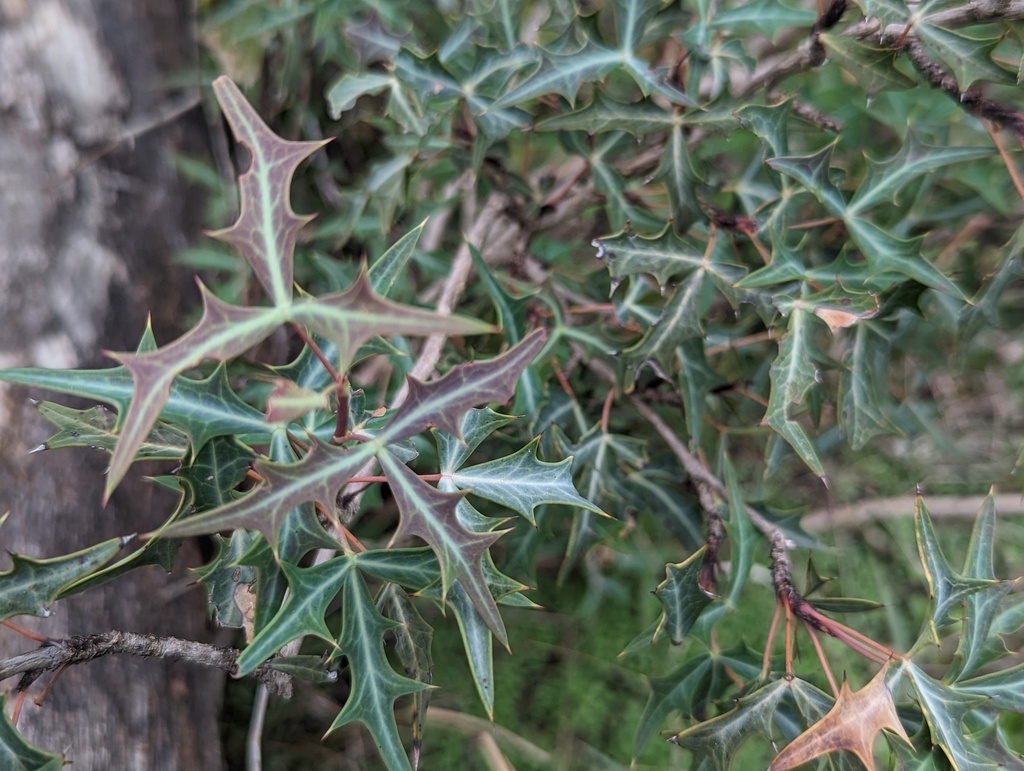
Berberis trifoliolata
- Origin
- North America
- Part used
- See detailed notebook
- Tradition
- Traditional ethnobotany
A spiny evergreen shrub, agarita, or desert barberry, grows in the arid expanses of the southern United States and northern Mexico. The peoples of the Sonoran and Chihuahuan deserts traditionally used its bright yellow bark and bitter roots, recognizing it as a plant of strength for the liver and skin. Its tart red fruits, meanwhile, nourished as much as they healed.
Traditional uses
Traditional support for the liver and digestion
The yellow bark, rich in berberine, was used as a bitter decoction to help with slow digestion and support liver function, according to the uses of the tribes of the Sonoran Desert.
Washes for irritated skin
A bark or root decoction traditionally served as a wash or compress for skin conditions, superficial wounds, and irritation, in the folk pharmacopoeias of northern Mexico.
A supplementary bitter tonic
Taken in small amounts before meals, the bitter bark was reputed to stimulate the appetite and promote healthy transit, in the manner of other bitter barberries.
Fruits as a fortifying food
The red berries, picked when ripe, were eaten fresh or dried by local populations, valued as much as food as for general support of vitality.
Before you use it
Contains berberine, an active alkaloid to be handled with caution: internal use discouraged without the advice of a health professional. Strictly forbidden for pregnant or breastfeeding women, because of uterotonic effects reported for berberine-type alkaloids. Possible interactions with certain medications (anticoagulants, blood-sugar-lowering drugs); seek advice if undergoing treatment. Do not give to young children without medical advice, particularly for prolonged internal use.
The detailed notebook
- Prepared as a paste or decoction
- Traditional duration of use
- Known contraindications
- Related species and their uses
Where to find it
Partner herbalists — available with the detailed notebook.
Sources
Wikipedia