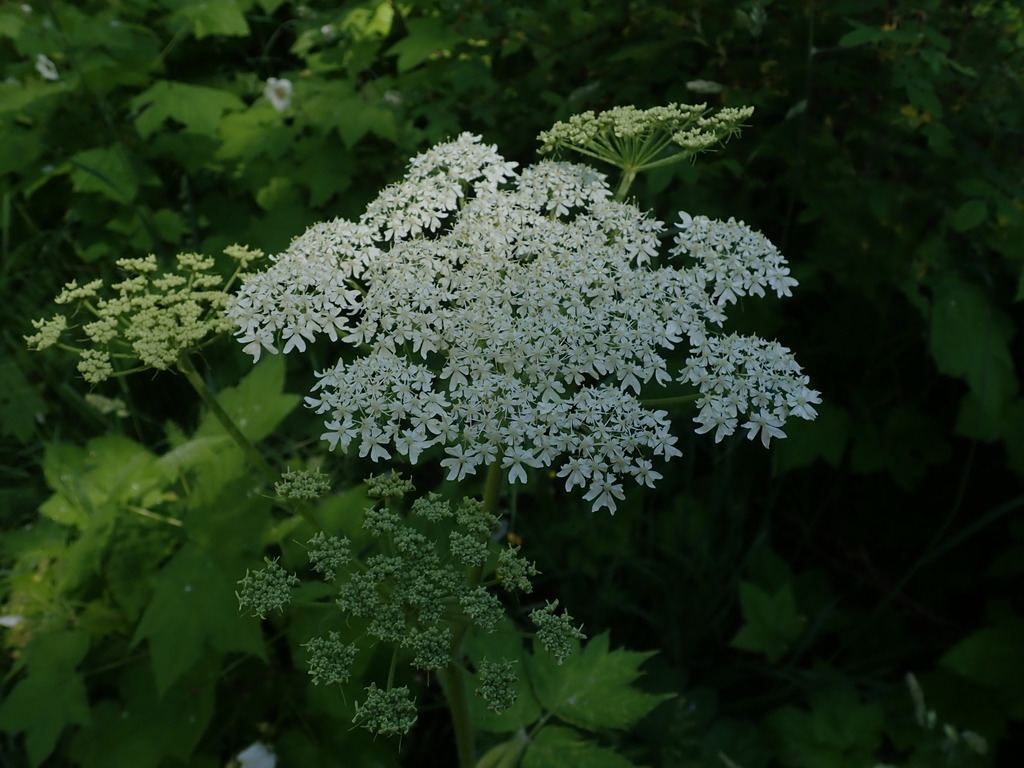
Woolly cow parsnip
- Origin
- North America
- Part used
- Flowers, Root
- Tradition
- Traditional ethnobotany
A tall member of the carrot family found at damp edges and riverbanks, woolly cow parsnip was known to many Indigenous peoples of North America, who drew from it a remedy with varied uses. Its powerful scent and imposing size made it a plant known to all, met with both respect and caution, as it grows alongside formidable cousins.
Traditional uses
Before you use it
Beware of possible confusion with toxic members of the carrot family (poison hemlock, giant hogweed): certain identification by a knowledgeable person is essential before any harvesting. The sap of woolly cow parsnip can cause skin photosensitization (burns, spots) after contact followed by sun exposure; handle with gloves. Internal use discouraged without the advice of a health professional, particularly for pregnant or breastfeeding women, children, and if undergoing medical treatment. Do not exceed an occasional, traditional use; avoid any prolonged self-medication.
The detailed notebook
- Prepared as a paste or decoction
- Traditional duration of use
- Known contraindications
- Related species and their uses
Where to find it
Partner herbalists — available with the detailed notebook.
Sources
PFAF, Wikipedia