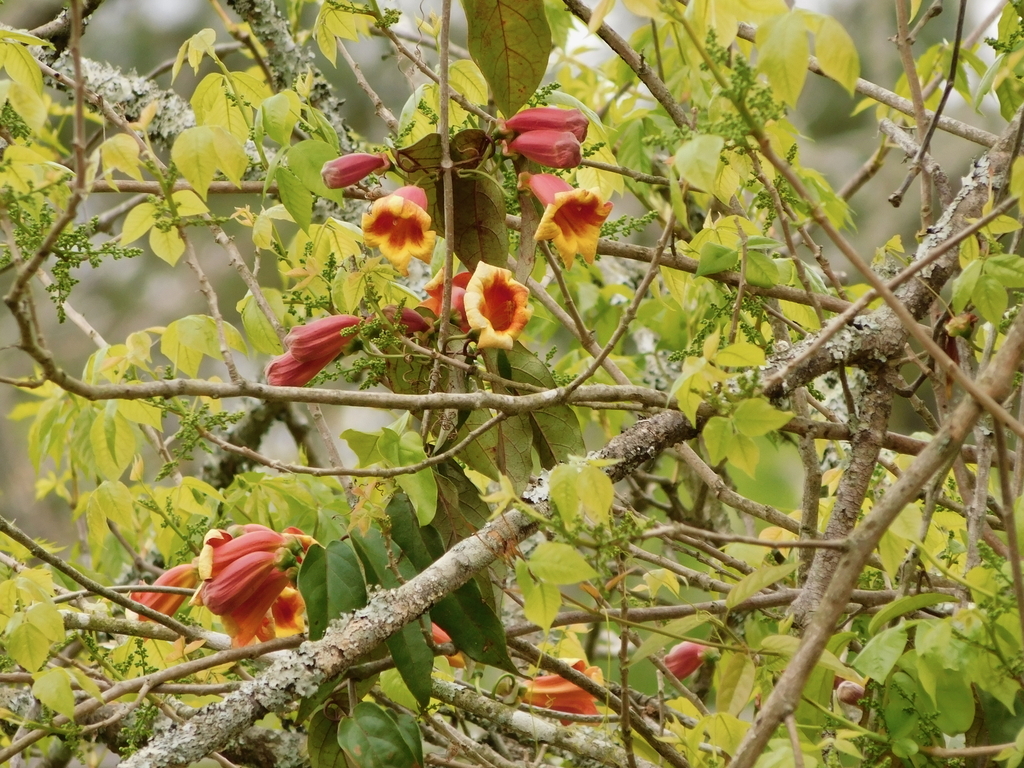
Bignonia capreolata
- Origin
- North America
- Part used
- Leaves, Root
- Tradition
- Traditional ethnobotany
A climbing vine with orange flowers, Bignonia capreolata adorns the wooded edges of the southeastern United States, clinging to trunks with its clawed tendrils. The Native American peoples of the American Southeast, notably the Cherokee, knew certain uses related to its root and foliage. Its use nonetheless remains marginal and poorly documented in modern herbalist literature.
Traditional uses
A traditional fortifying decoction
The root was sometimes prepared as a decoction by certain Native American nations of the Southeast, for a general fortifying purpose. This use belongs to an oral tradition poorly detailed in written sources.
External application on the skin
The leaves were reportedly used externally, particularly as a poultice, for minor skin irritation according to certain local traditions.
A traditional use as a tonic
Some old sources mention a use of the root as a mild digestive tonic, without a precise description of the methods or how consistent this use was across communities.
Before you use it
A traditional use very poorly documented by reliable sources: the greatest caution is recommended before any use. Do not use in pregnant or breastfeeding women, for lack of safety data. Avoid in children given the total absence of toxicological data. It is essential to consult a health professional or an experienced herbalist before any use, internal or external.
The detailed notebook
- Prepared as a paste or decoction
- Traditional duration of use
- Known contraindications
- Related species and their uses
Where to find it
Partner herbalists — available with the detailed notebook.
Sources
PFAF, Wikipedia