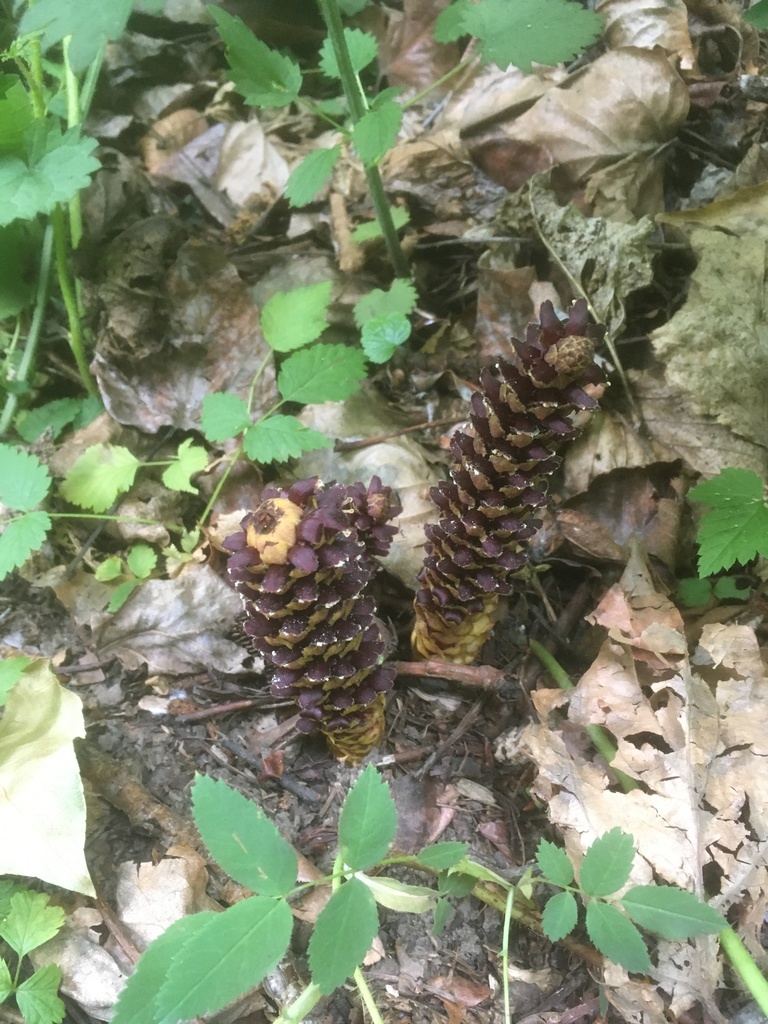
Boschniakia rossica
- Origin
- Asia
- Part used
- See detailed notebook
- Tradition
- Traditional ethnobotany
A strange, chlorophyll-free plant, Boschniakia rossica grows as a parasite on alder roots, in the boreal reaches of Asia and Siberia. The indigenous peoples of the north — notably in the Russian Far East and Manchuria — considered it a precious root, reserved for times of deep fatigue or convalescence. Its appearance as a brownish cone emerging from the ground earned it an almost mysterious reputation in local traditions.
Traditional uses
Traditional support for vigor
The root was traditionally used as a general tonic, said to restore strength after a long illness or a harsh winter, in the manner of other tonic roots from North Asia.
Traditional use related to the cycle
In certain Siberian and Chinese folk pharmacopeia, this plant is among the traditional remedies intended to help with disorders of the female cycle, a use to be regarded with caution and not scientifically documented.
Traditional kidney support
Traditional Chinese medicine classifies it among the so-called "kidney- and yang-tonifying" plants, used to support vitality related to this sphere according to this ancient concept.
Traditional use against pain
A folk use is reported to relieve lower-back and joint pain, as a decoction, in the regions where the plant grows naturally.
What to know before use
A plant poorly documented scientifically outside traditional Chinese and Siberian sources: the advice of a health professional is essential before any use. Not recommended during pregnancy and breastfeeding due to its traditional use related to the female hormonal sphere. Avoid in children, for lack of sufficient safety data. Do not combine with other hormonal or kidney treatments without medical advice, due to uncharacterized potential interactions.
The detailed notebook
- Prepared as a paste or decoction
- Traditional duration of use
- Known contraindications
- Related species and their uses
Where to find it
Partner herbalists — available with the detailed notebook.
Sources
Wikipedia