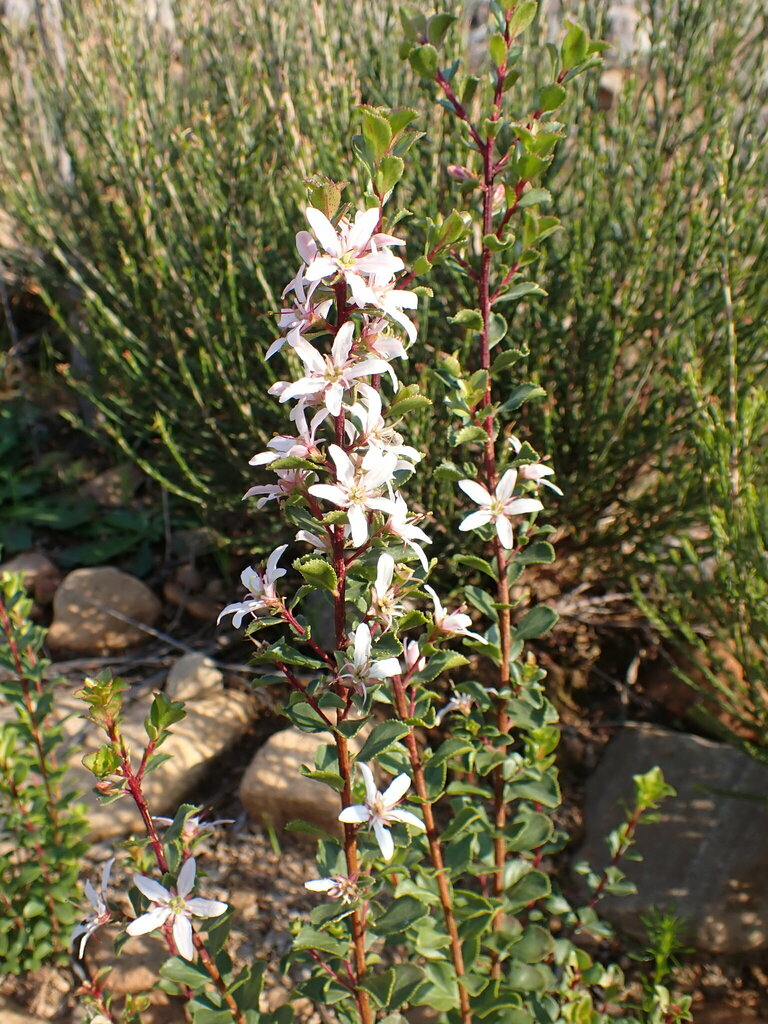
Buchu
- Origin
- Africa
- Part used
- Leaves
- Tradition
- Traditional ethnobotany
Buchu (Agathosma betulina) is an aromatic shrub native to the mountains of the Cape, in South Africa, where the Khoisan and San peoples used it for generations for its fragrant leaves. Introduced to Europe in the 19th century by colonial traders and botanists, it then became a remedy prized by Western herbalists, particularly for the urinary tract. Its characteristic scent, reminiscent of mint and blackcurrant, makes it an easily recognizable plant in the traditional South African herbal repertoire.
Traditional uses
Traditional support for the urinary tract
Buchu leaves were traditionally infused to help with urinary discomfort and support bladder comfort, a use widely reported in South African folk pharmacopeia.
Digestive comfort after meals
As a light decoction, Buchu was used to ease bloating and aid digestion, in the manner of other carminative aromatic plants.
External use on minor irritations
The Khoisan sometimes applied preparations made from Buchu leaves to the skin to soothe minor irritations and insect bites.
Support during colds
Traditionally, an infusion of Buchu was drunk to help with mild feverish states and seasonal colds.
What to know before use
Not recommended during pregnancy and breastfeeding due to a reported traditional emmenagogue use. Avoid in cases of known kidney or liver disease, for lack of sufficient data on prolonged use. May interact with certain diuretic or anticoagulant treatments; seek the advice of a health professional before any regular use. Do not give to young children without medical advice, as traditional use in children is poorly documented.
The detailed notebook
- Prepared as a paste or decoction
- Traditional duration of use
- Known contraindications
- Related species and their uses
Where to find it
Partner herbalists — available with the detailed notebook.
Sources
PFAF, Wikipedia