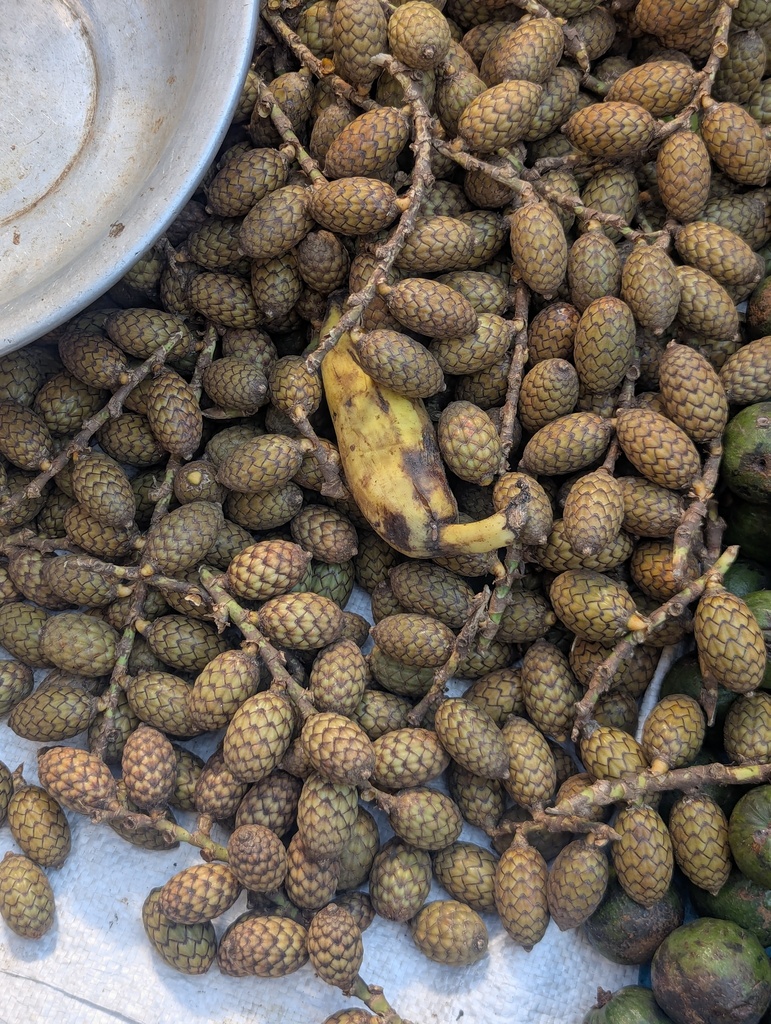
Calamus erectus
- Origin
- Asia
- Part used
- See detailed notebook
- Tradition
- Traditional ethnobotany
Calamus erectus, a thorny rattan of Asia's damp forests, belongs to that vast family of climbing palms whose flexible stems have, for generations, served for weaving as much as for healing. In the village traditions of South and Southeast Asia, its roots and young stems were among the simple remedies passed down orally from generation to generation.
Traditional uses
Digestive support
The root decoction was traditionally drunk to soothe mild digestive troubles and post-meal heaviness, according to folk uses reported in certain regions of Asia.
Support during feverish states
Certain village traditions used a root-based preparation to help with feverish states, alongside other care.
Care for mild skin conditions
Pulp or sap extracted from the stem was sometimes applied locally to superficial skin irritation, according to traditional uses poorly documented outside local sources.
Traditional friction rubs
A stem-based preparation was occasionally used as an external friction rub to relieve joint pain, in certain rural Asian pharmacopeia.
What to know before use
Traditional use poorly documented scientifically: seek the advice of a health professional before any internal use. Avoid in pregnant or breastfeeding women, for lack of sufficient safety data. Do not use in children without medical advice. Reserved for cautious external use in case of persistent skin irritation; discontinue in case of reaction.
The detailed notebook
- Prepared as a paste or decoction
- Traditional duration of use
- Known contraindications
- Related species and their uses
Where to find it
Partner herbalists — available with the detailed notebook.
Sources
PFAF