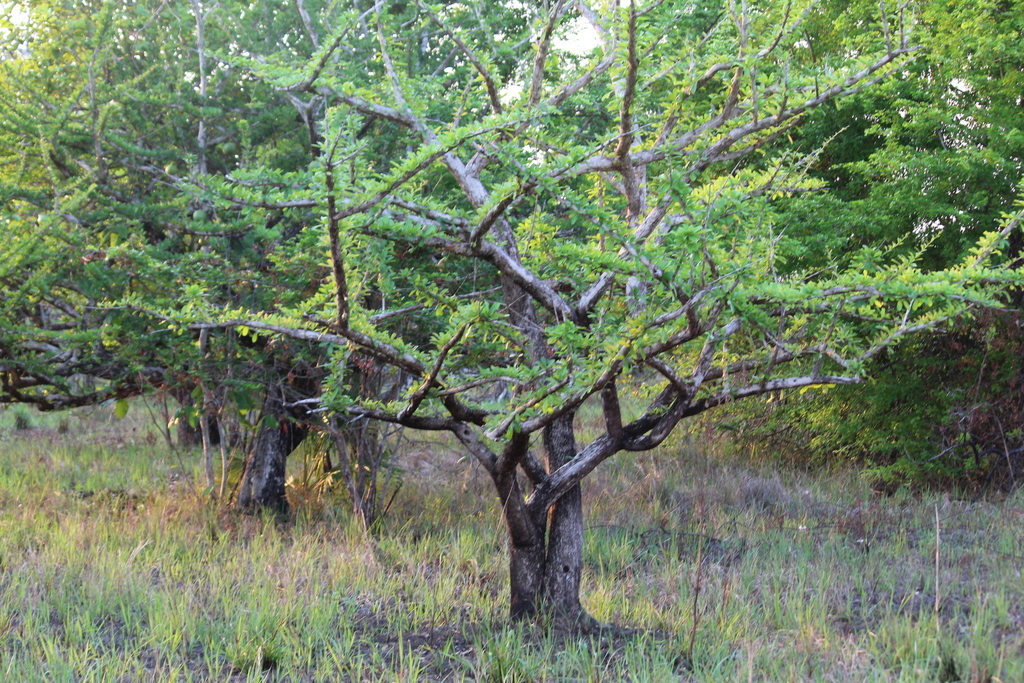
calabash tree
- Origin
- North America
- Part used
- See detailed notebook
- Tradition
- Traditional ethnobotany
The calabash tree, a familiar sight across tropical America, has been known for centuries to the peoples of Central America for its hard-shelled fruit, turned into a vessel as often as a remedy. The pulp and leaves held a quiet but steady place in folk pharmacopoeias, passed down from generation to generation.
Traditional uses
Traditional support for the airways
The fruit's pulp, sometimes mixed with honey, was traditionally used in Central America to ease coughing and bronchial ailments.
A folk use for digestive trouble
A decoction of pulp or leaves was used in certain local traditions to relieve stomachaches and aid digestion.
Application to damaged skin
The crushed leaves or pulp were sometimes applied as a poultice to bruises and skin inflammation, according to reported folk uses.
A traditional remedy for fever
In certain regions, a preparation made from calabash pulp was given to bring down fever, alongside other local remedies.
Before you use it
The pulp and seeds may be toxic if consumed in excess or poorly prepared; professional advice is recommended before any internal use. Discouraged for pregnant or breastfeeding women in the absence of sufficient safety data. Do not give to young children without the advice of a health professional. This traditional use has not been the subject of sufficient controlled studies; it cannot replace medical advice.
The detailed notebook
- Prepared as a paste or decoction
- Traditional duration of use
- Known contraindications
- Related species and their uses
Where to find it
Partner herbalists — available with the detailed notebook.
Sources
PFAF