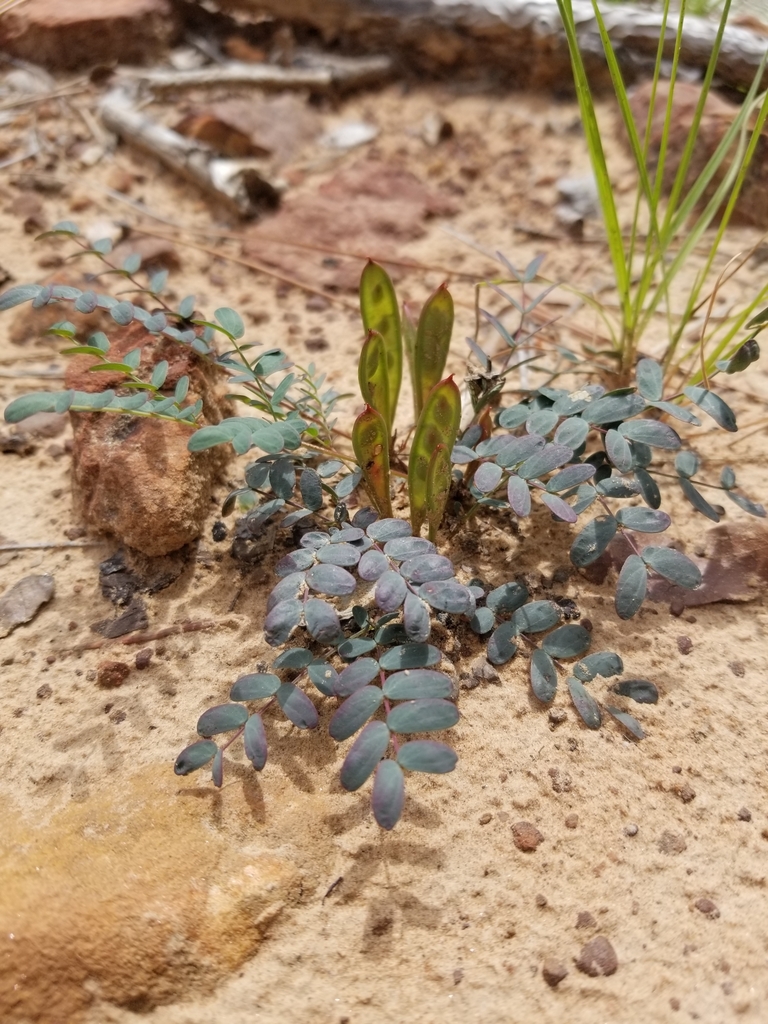
Calliandra humilis
- Origin
- North America
- Part used
- Root
- Tradition
- Traditional ethnobotany
A quiet inhabitant of the dry plains and rocky hills of North America, Calliandra humilis long remained a plant of local knowledge, passed down by a handful of traditional Native American practitioners. Its root, more than its aerial parts, drew the attention of the old herbalists of the American Southwest. Little described in European texts, it remains a plant of oral knowledge rather than scholarly literature.
Traditional uses
Traditional support for digestive trouble
The root was traditionally used as a mild decoction to ease passing digestive discomfort, according to uses reported among certain Indigenous communities.
A local use for diffuse pain
Some sources report an external use of the root to relieve mild muscle or joint pain.
A traditional remedy for feverish states
The root decoction was reportedly used occasionally to help with feverish episodes, in a spirit of traditional care rather than proven therapy.
Traditional care for skin irritation
A use as a wash or compress is mentioned to soothe certain superficial skin irritation, without in-depth documentation of its effectiveness.
Before you use it
A traditional use poorly documented scientifically: caution is warranted, particularly for prolonged internal use. Discouraged for pregnant or breastfeeding women, for lack of sufficient safety data. Do not use in children without the advice of a health professional. Consult a health professional or an experienced herbalist before any use, particularly if undergoing medical treatment.
The detailed notebook
- Prepared as a paste or decoction
- Traditional duration of use
- Known contraindications
- Related species and their uses
Where to find it
Partner herbalists — available with the detailed notebook.
Sources
PFAF, Wikipedia