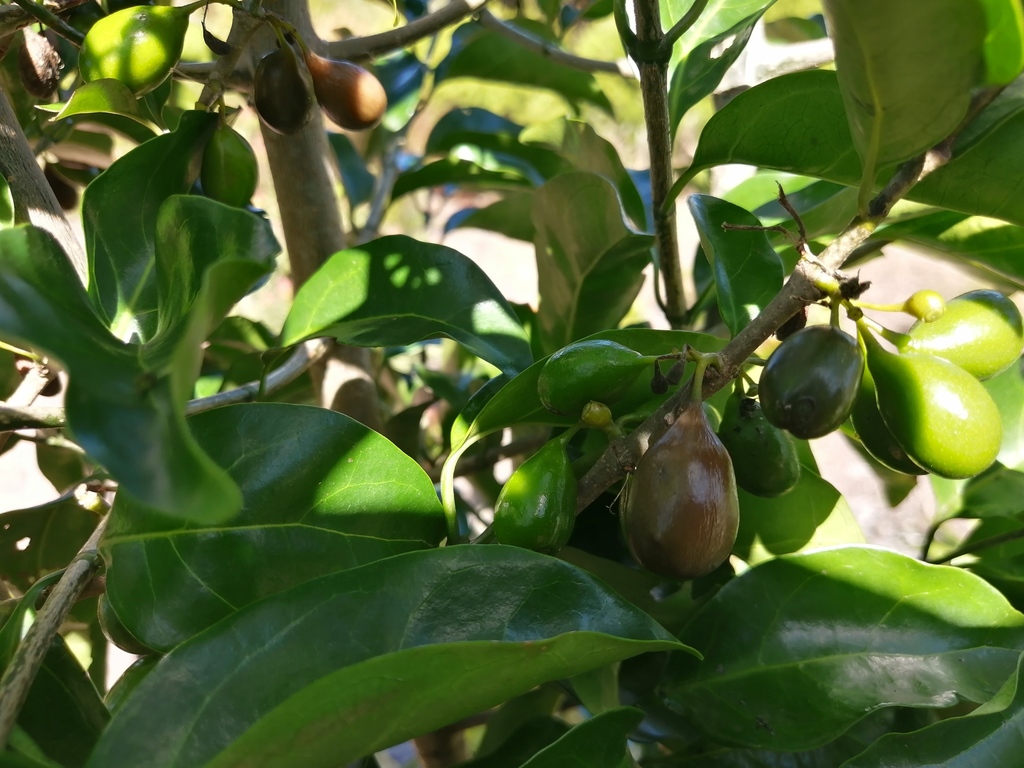
Canthium inerme
- Origin
- Africa
- Part used
- See detailed notebook
- Tradition
- Traditional ethnobotany
A discreet shrub of the savannas and wooded margins of southern Africa, Canthium inerme is known to traditional healers under various vernacular names, often associated with wound care and digestive troubles. Its hard wood and roots have, in certain communities, a place in the local pharmacopeia passed down orally from generation to generation.
Traditional uses
Care of wounds and injuries
Crushed bark and roots were traditionally applied as a poultice on wounds to promote cleansing and healing.
Digestive troubles and abdominal pain
A root decoction was sometimes drunk to ease stomach pain and digestive troubles according to certain southern African traditions.
Various pains and ailments
The roots appear in several traditional remedy repertoires against bodily pain, although the precise uses vary greatly by region and healer.
Traditional use related to fertility
Certain traditions report a use of the roots related to fertility or gynecological troubles, a use that remains poorly documented scientifically.
What to know before use
A scientifically understudied plant: the exact composition and potential toxicity of the roots and bark remain poorly understood. Traditional internal use (root decoction) is not recommended without the advice of a health professional or an experienced herbalist. Avoid in pregnant or breastfeeding women, as well as in children, in the absence of sufficient safety data. Do not use as a replacement for medical treatment for persistent abdominal pain or deep wounds.
The detailed notebook
- Prepared as a paste or decoction
- Traditional duration of use
- Known contraindications
- Related species and their uses
Where to find it
Partner herbalists — available with the detailed notebook.
Sources
PFAF