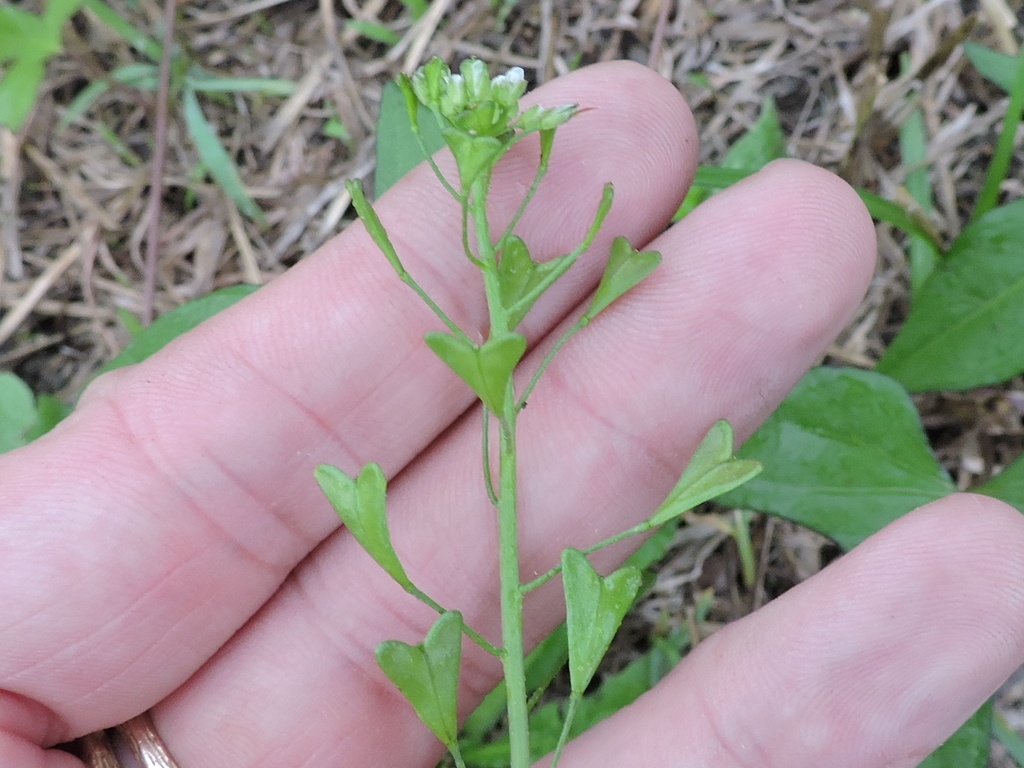
Capsella bursa-pastoris
- Origin
- Europe
- Part used
- See detailed notebook
- Tradition
- Traditional ethnobotany
A discreet dweller of paths and gardens, shepherd's purse takes its name from its small flattened pods, reminiscent of the pouches once carried by pilgrims. Since the Middle Ages, European herbalists held it in particular esteem for its use with flows and bleeding, which earned it a quiet but constant place in the old herbals.
Traditional uses
Traditional support for heavy periods
Shepherd's purse was traditionally used to help with periods considered too heavy, particularly as a short-term remedy during menstruation.
Traditional use for minor bleeding
Old-time herbalists credited it with a reputation for helping to limit minor superficial bleeding, applied externally to the skin.
A light digestive tea
Taken as a herbal tea, the whole plant was sometimes used traditionally to help with sluggish digestion.
Soothing compresses
As a poultice or compress, shepherd's purse was applied to minor wounds or skin irritations according to European folk tradition.
Before you use it
Not advised during pregnancy due to its traditional use linked to uterine stimulation. Avoid in cases of clotting disorders or anticoagulant treatment without prior medical advice. Internal use should be limited to short periods, and a healthcare professional should be consulted before any prolonged use. Do not use in children without the supervision of a qualified practitioner.
The detailed notebook
- Prepared as a paste or decoction
- Traditional duration of use
- Known contraindications
- Related species and their uses
Where to find it
Partner herbalists — available with the detailed notebook.
Sources
Wikipedia