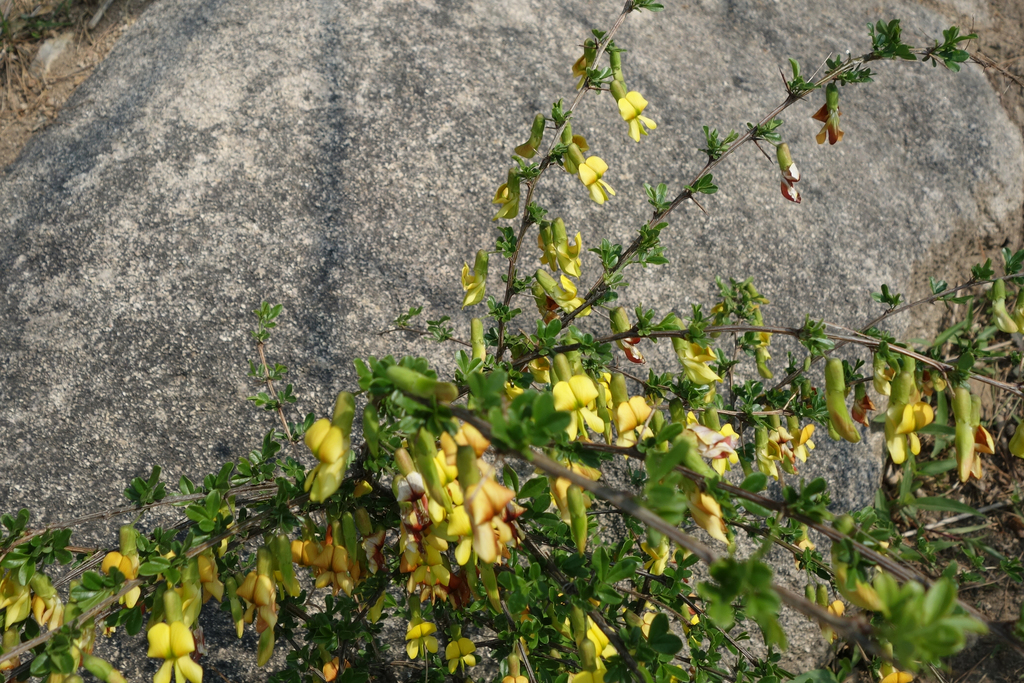
Caragana sinica
- Origin
- Asia
- Part used
- See detailed notebook
- Tradition
- Traditional ethnobotany
Caragana sinica, a thorny shrub native to the temperate regions of China, has adorned ornamental gardens as much as treatises of traditional Chinese medicine for centuries. Its pale yellow flowers, discreetly tinged with orange, gave rise to an ancient but little-known use outside Asia, passed down mostly locally.
Traditional uses
Traditional digestive support
The roots of Caragana sinica were traditionally used in China to help with difficult digestion and feelings of heaviness after meals.
Relief of rheumatic pain
In certain rural regions of China, the bark and root were used as a decoction to relieve joint and lower-back pain attributed to cold and dampness according to traditional Chinese medicine.
Traditional use related to female cycles
The root has historically been among the plants used empirically to help with menstrual irregularities, a use documented but not detailed in available sources.
A traditional fortifier
Considered a mild tonic in certain local folk pharmacopeia, it was sometimes combined with other roots to support general vitality.
What to know before use
Traditional use poorly documented outside China; caution is warranted and the advice of a health professional trained in Chinese plants is recommended before any use. Not recommended for pregnant or breastfeeding women, due to its traditional use related to female cycles and a lack of safety data. Avoid in children, for lack of sufficient tolerance data. Do not confuse with other Caragana species or with plants with similar roots; ensure precise botanical identification before harvesting or purchase.
The detailed notebook
- Prepared as a paste or decoction
- Traditional duration of use
- Known contraindications
- Related species and their uses
Where to find it
Partner herbalists — available with the detailed notebook.
Sources
PFAF