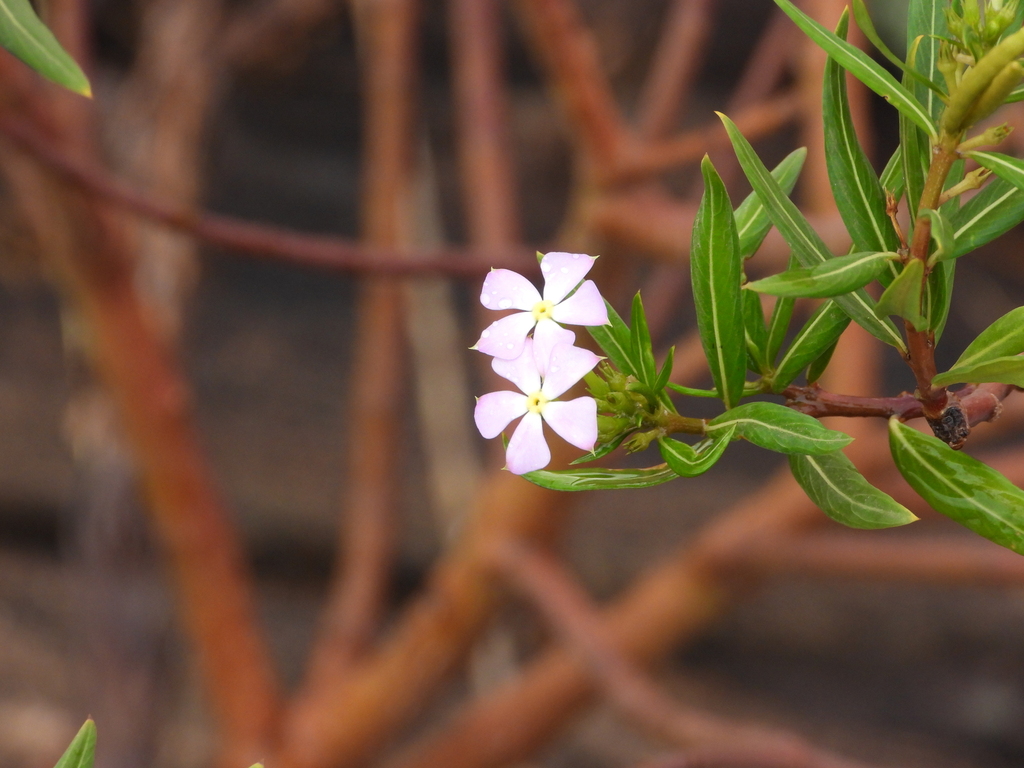
Catharanthus lanceus
- Origin
- Africa
- Part used
- See detailed notebook
- Tradition
- Traditional ethnobotany
A discreet cousin of the famous Madagascar periwinkle, Catharanthus lanceus grows in open undergrowth and forest margins of southern Africa and Madagascar. Traditional herbalists of the Malagasy highlands and neighboring regions gave it a modest but recognized place in their local pharmacopeias, passed down orally from generation to generation.
Traditional uses
Easing digestive troubles
The leaves were traditionally used as a light decoction to calm digestive discomfort and passing stomach aches.
Care of wounds and irritations
Used externally, a leaf-based preparation was applied locally to certain skin conditions according to reported village practices.
Traditional use against fevers
Like other Catharanthus species, this species is among the plants once used to help with feverish states in certain local pharmacopeias.
Reported traditional gynecological use
Some ethnobotanical sources mention a traditional use related to women's troubles, though this use is not precisely documented today.
What to know before use
The Apocynaceae family, to which this plant belongs, is known to contain potent alkaloids; any internal use must be supervised by a qualified professional. Strongly not recommended for pregnant or breastfeeding women due to risks linked to the alkaloids. Never use in children without medical advice. Interactions with certain medications cannot be ruled out; seek advice before any prolonged use.
The detailed notebook
- Prepared as a paste or decoction
- Traditional duration of use
- Known contraindications
- Related species and their uses
Where to find it
Partner herbalists — available with the detailed notebook.
Sources
PFAF