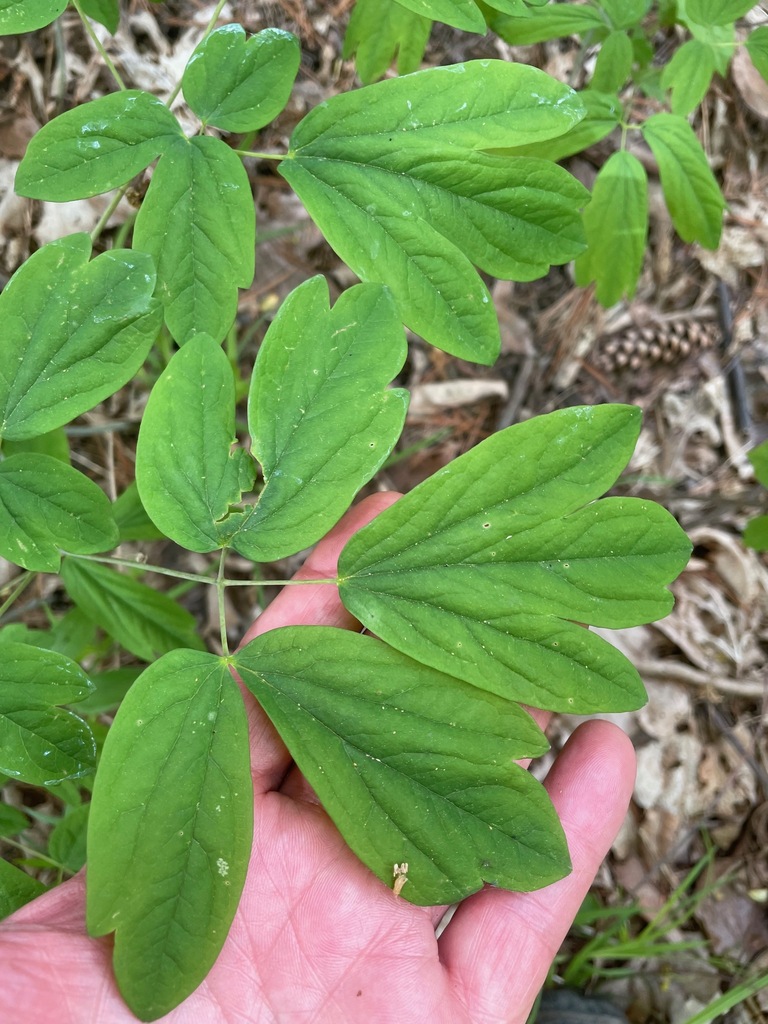
Caulophyllum thalictroides
- Origin
- North America
- Part used
- Leaves, Root
- Tradition
- Traditional ethnobotany
Caulophyllum thalictroides, also called blue cohosh, is a perennial plant of North America's damp undergrowth, long revered by Indigenous peoples as an ally of the female body. Traditional healers regarded it as a plant for life's great milestones, passed down with caution from generation to generation. Its use later spread into nineteenth-century American eclectic herbalism.
Traditional uses
Traditional support in late pregnancy
The root was traditionally used by certain Native American healers in the very last stage of pregnancy, to help prepare the body for childbirth. This historical use remains strictly reserved for professional supervision.
Menstrual cycle regulation
The rhizome was used as a decoction to help with painful or irregular periods, for what traditional herbalists called an emmenagogue purpose.
Easing rheumatic pain
In more general use, the dried root went into preparations meant to relieve joint pain and muscle tension, according to folk tradition.
A traditional use for spasms
Some old sources mention an occasional use of the plant to calm digestive spasms, always at a low dose and only now and then.
Before you use it
A plant to be handled with great caution: it is formally discouraged during pregnancy outside the supervision of a doctor or an experienced midwife, because of reported uterus-stimulating properties. Contraindicated in children, during breastfeeding, or in the presence of cardiovascular disease, because of alkaloid compounds that can affect heart rhythm. Never use without the advice of a health professional skilled in herbal medicine, particularly if undergoing medication (risk of interaction). The fresh plant and the seeds are toxic; only the dried, properly prepared root is traditionally used, at a measured dose.
The detailed notebook
- Prepared as a paste or decoction
- Traditional duration of use
- Known contraindications
- Related species and their uses
Where to find it
Partner herbalists — available with the detailed notebook.
Sources
PFAF, Wikipedia