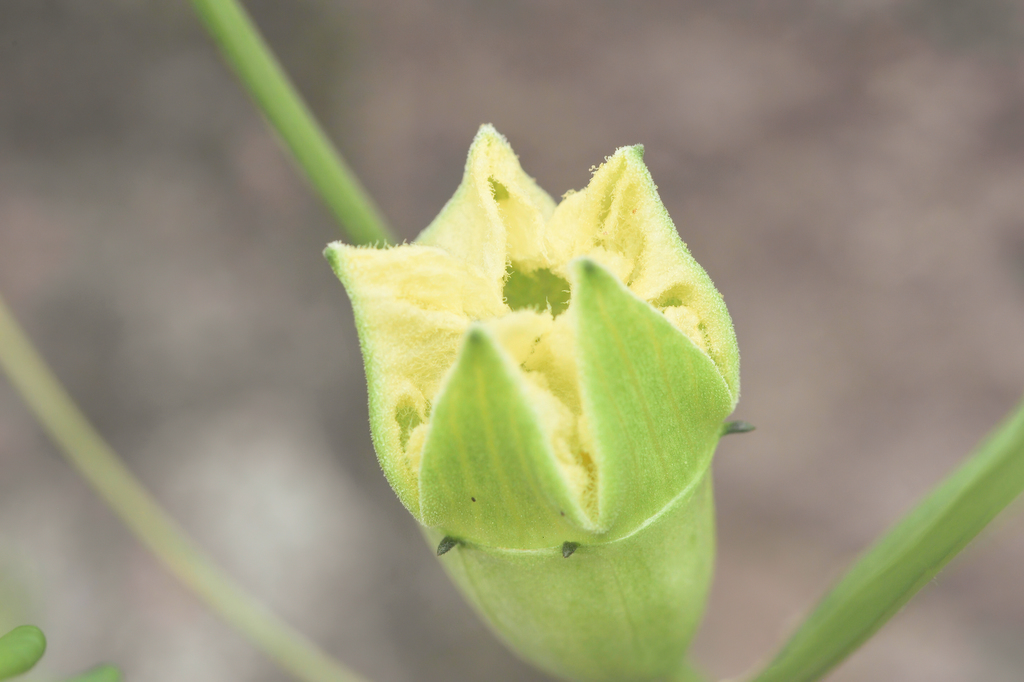
Cayaponia espelina
- Origin
- South America
- Part used
- See detailed notebook
- Tradition
- Traditional ethnobotany
In South American herbalist notebooks, Cayaponia espelina appears as an unassuming root, known to a few Andean and Amazonian popular traditions rather than to the major official treatises. Its use, passed down orally over generations, remains poorly documented today by Western science, which calls for a cautious reading of its history.
Traditional uses
A traditional bitter root
The root, reputed to be bitter, is said to have been used in certain rural communities to accompany difficult digestion, in the manner of other bitter cucurbits of the region.
A traditional external use
Preparations made from crushed root are said to have been applied locally to the skin in a few popular traditions, though this use is not widely attested.
A reserved traditional use
Certain cucurbits of the genus Cayaponia are mentioned in popular uses related to the female cycle, but these uses are old, rare, and should be regarded with great reservation.
A popular fortifying root
The plant is sometimes counted among the so-called 'fortifying' roots of South American popular pharmacopoeia, without any precisely codified use.
What to know before use
A little-studied plant: the chemical composition and potential toxicity of Cayaponia espelina are not well characterized to date. Use is discouraged for pregnant or breastfeeding women, as well as for children, in the absence of sufficient safety data. Do not self-administer this plant; consult a healthcare professional or a qualified herbalist familiar with Amazonian plants before any use. Avoid any combination with other plants or medication treatments without specialized advice, as certain cucurbits of the same genus are known for their pronounced bitterness and biological activity.
The detailed notebook
- Prepared as a paste or decoction
- Traditional duration of use
- Known contraindications
- Related species and their uses
Where to find it
Partner herbalists — available with the detailed notebook.
Sources
PFAF