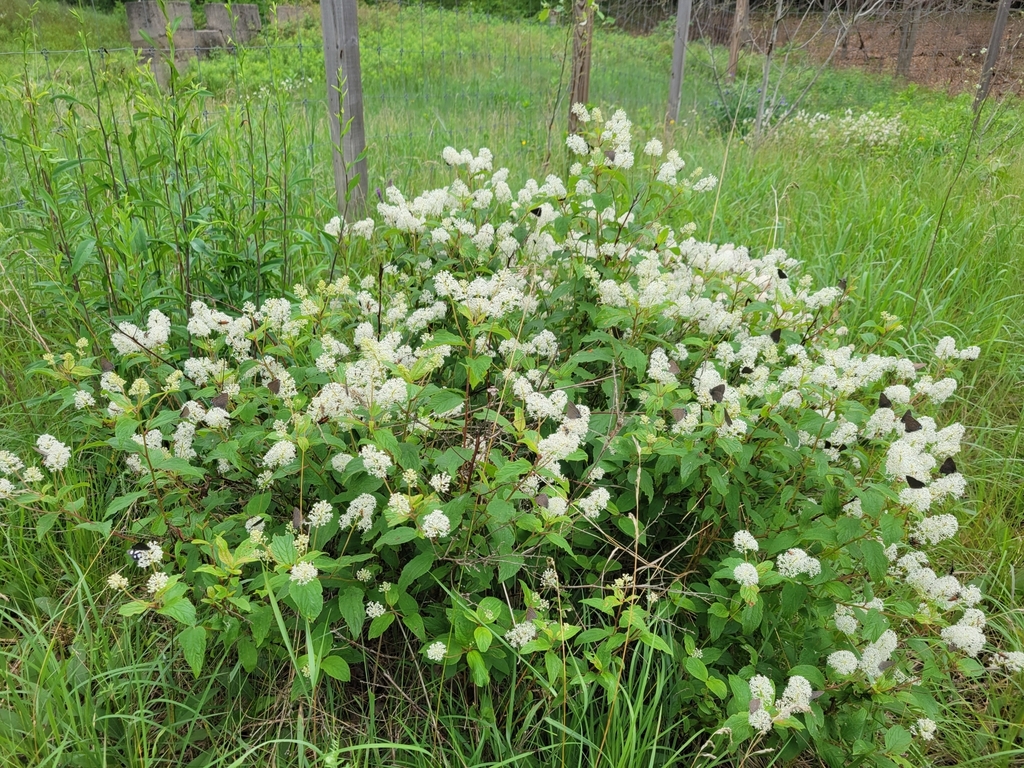
Ceanothus americanus
- Origin
- North America
- Part used
- Root
- Tradition
- Traditional ethnobotany
Ceanothus americanus, which settlers sometimes called "New Jersey tea" in memory of the days when its leaves replaced black tea grown scarce, was known to herbalists chiefly for the properties of its root. The Indigenous peoples of North America made careful use of it, a practice later passed on to nineteenth-century eclectic practitioners. Its red, astringent root bark holds a quiet but lasting place in traditional herbalist notebooks.
Traditional uses
Traditional support for the spleen and lymph
Ceanothus root was traditionally used to help with congestion of the spleen and support lymphatic drainage, according to uses reported by American eclectic practitioners.
Help with throat ailments
As a decoction or a gargle, it was traditionally used to soothe irritated throats and the mucous membranes of the ear, nose, and throat.
An astringent use for bleeding
Reputed for its astringent properties, the root was traditionally used for minor bleeding of the mucous membranes, particularly the gums.
Traditional digestive support
A light decoction was sometimes taken for its tonic, astringent effect on the digestive system, in North American herbalist tradition.
Before you use it
Use not recommended for pregnant or breastfeeding women, for lack of sufficient data. Consult a health professional before any prolonged use, particularly if undergoing anticoagulant treatment or with clotting disorders, because of the plant's pronounced astringent properties. Do not exceed the traditional doses reported without the advice of a herbalist or a qualified practitioner. Avoid self-medication in children.
The detailed notebook
- Prepared as a paste or decoction
- Traditional duration of use
- Known contraindications
- Related species and their uses
Where to find it
Partner herbalists — available with the detailed notebook.
Sources
PFAF, Wikipedia