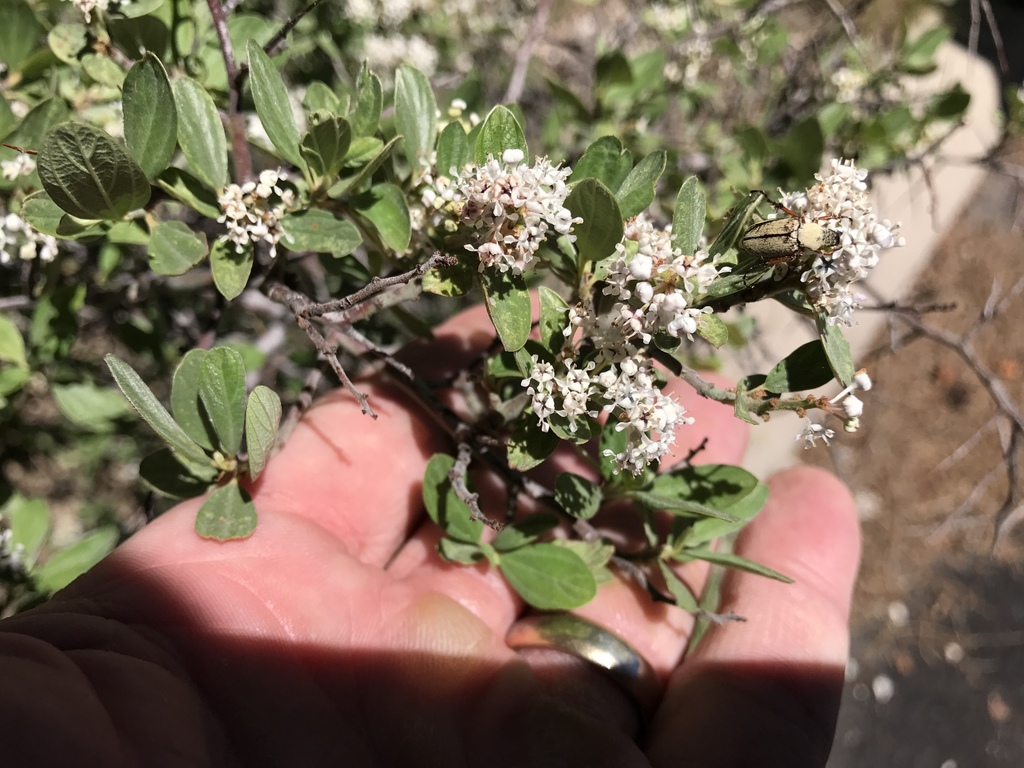
Ceanothus fendleri
- Origin
- North America
- Part used
- See detailed notebook
- Tradition
- Traditional ethnobotany
A spiny shrub of the arid foothills of the American Southwest, Ceanothus fendleri was long known to the Indigenous peoples of the Rockies and New Mexico, who drew roots and foliage from it for their everyday care. Its more famous cousin, Ceanothus americanus, shares with it a long-standing reputation tied to blood circulation and the lymphatic system.
Traditional uses
Traditional support for the lymph
The roots were traditionally used as a decoction to support lymphatic circulation, in the manner of other Ceanothus species used in Native American pharmacopoeias.
Respiratory ailments
Certain tribes of the Plains and the Southwest used preparations of leaves or bark to ease coughing and mild respiratory irritation.
An external use on the skin
The crushed leaves, or a decoction of them, traditionally served as a local application to clean and soothe certain superficial skin conditions.
An occasional digestive tea
The dried leaves of Ceanothus fendleri, like other species of the genus, were sometimes infused as an everyday drink, reputed to be gentle on the stomach.
Before you use it
The roots contain compounds that act on blood clotting; their use is discouraged during anticoagulant treatment or with clotting disorders, except on the advice of a health professional. Use discouraged during pregnancy and breastfeeding, for lack of sufficient data. Do not exceed occasional, traditional uses; prolonged or high-dose use is not documented with certainty. Do not give to young children without the advice of a qualified professional.
The detailed notebook
- Prepared as a paste or decoction
- Traditional duration of use
- Known contraindications
- Related species and their uses
Where to find it
Partner herbalists — available with the detailed notebook.
Sources
PFAF