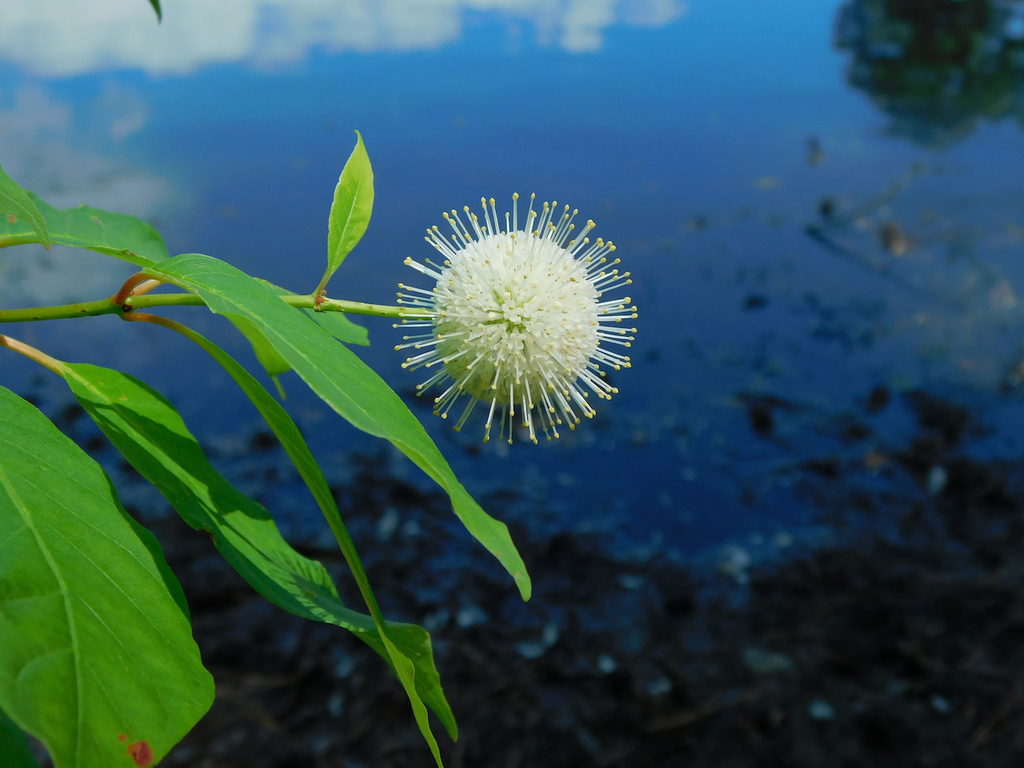
Cephalanthus occidentalis
- Origin
- North America
- Part used
- See detailed notebook
- Tradition
- Traditional ethnobotany
Buttonbush, a shrub of North America's wetlands, was known to Indigenous peoples as "button wood" because of its characteristic spherical flowers. The Native American nations of the eastern continent credited it with various traditional uses, particularly involving the bark and roots. Its quiet presence along marshes and waterways earned it a modest but enduring place in folk herbalist notebooks.
Traditional uses
A traditional use for digestive trouble
The bark was sometimes used as a decoction by certain Native American nations to ease digestive disorders and stomachaches, according to reported but scientifically poorly documented uses.
Bark used against fever
The bark decoction was among the traditional remedies for feverish states, in a tradition close to that of other bitter North American barks.
An external application on the skin
Preparations made from bark or root were reportedly used externally for certain skin complaints, according to old ethnobotanical sources.
A traditional use reserved for experienced herbal practitioners
Certain traditions report a use tied to women's complaints, but this use remains poorly documented and calls for particular caution.
Before you use it
This plant contains compounds whose toxicity is not fully characterized; prolonged or unsupervised internal use is discouraged. Formally avoid during pregnancy and breastfeeding, for lack of sufficient safety data. Do not give to children. Seek the advice of a health professional or an experienced herbalist before any internal use, particularly if undergoing medication.
The detailed notebook
- Prepared as a paste or decoction
- Traditional duration of use
- Known contraindications
- Related species and their uses
Where to find it
Partner herbalists — available with the detailed notebook.
Sources
PFAF