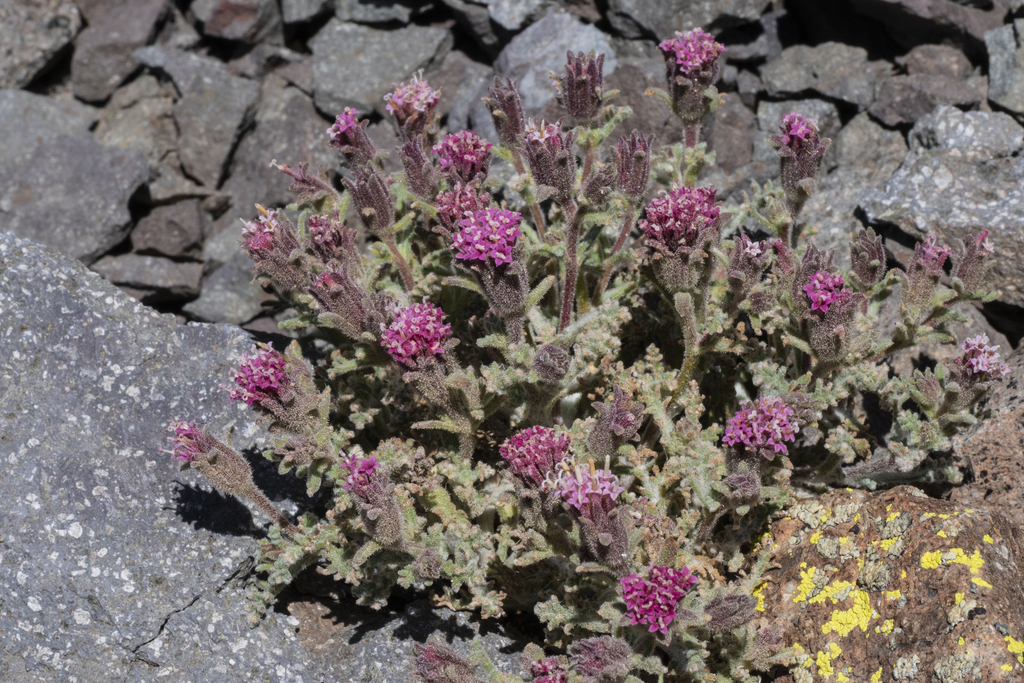
Chaenactis douglasii
- Origin
- North America
- Part used
- See detailed notebook
- Tradition
- Traditional ethnobotany
On the dry slopes and scree of the American West, Chaenactis douglasii, sometimes called "pincushion" by English-speaking settlers, grew quietly among the rocks. The Indigenous peoples of these regions, particularly certain nations of the Great Plains and the Intermountain Basin, knew its modest uses, passed down orally from generation to generation. This small desert daisy never held a central place in pharmacopoeias, but its memory lives on in ethnobotanists' notebooks.
Traditional uses
Easing stings and bites
The chewed or crushed leaves were traditionally applied as a poultice to insect stings and bites, particularly from spiders, according to certain Native American ethnobotanical accounts.
A use for various kinds of pain
A light decoction of the whole plant was reportedly used occasionally to relieve certain bodily aches, within a limited, poorly documented traditional use.
Traditional fumigation
Some accounts report a use of the dried plant as a fumigation, in ritual contexts or to clear the airways, though this practice is not widely attested in the literature.
Before you use it
A traditional use very poorly documented scientifically: caution calls for never substituting it for medical advice. No reliable data on toxicity or interactions allow for a safe internal use to be established; avoid taking it by mouth without professional supervision. Discouraged for pregnant or breastfeeding women, as well as young children, for lack of safety data. Always have the plant identified by a knowledgeable person before any harvesting, as Chaenactis can be confused with other local daisy-family plants.
The detailed notebook
- Prepared as a paste or decoction
- Traditional duration of use
- Known contraindications
- Related species and their uses
Where to find it
Partner herbalists — available with the detailed notebook.
Sources
PFAF, Wikipedia