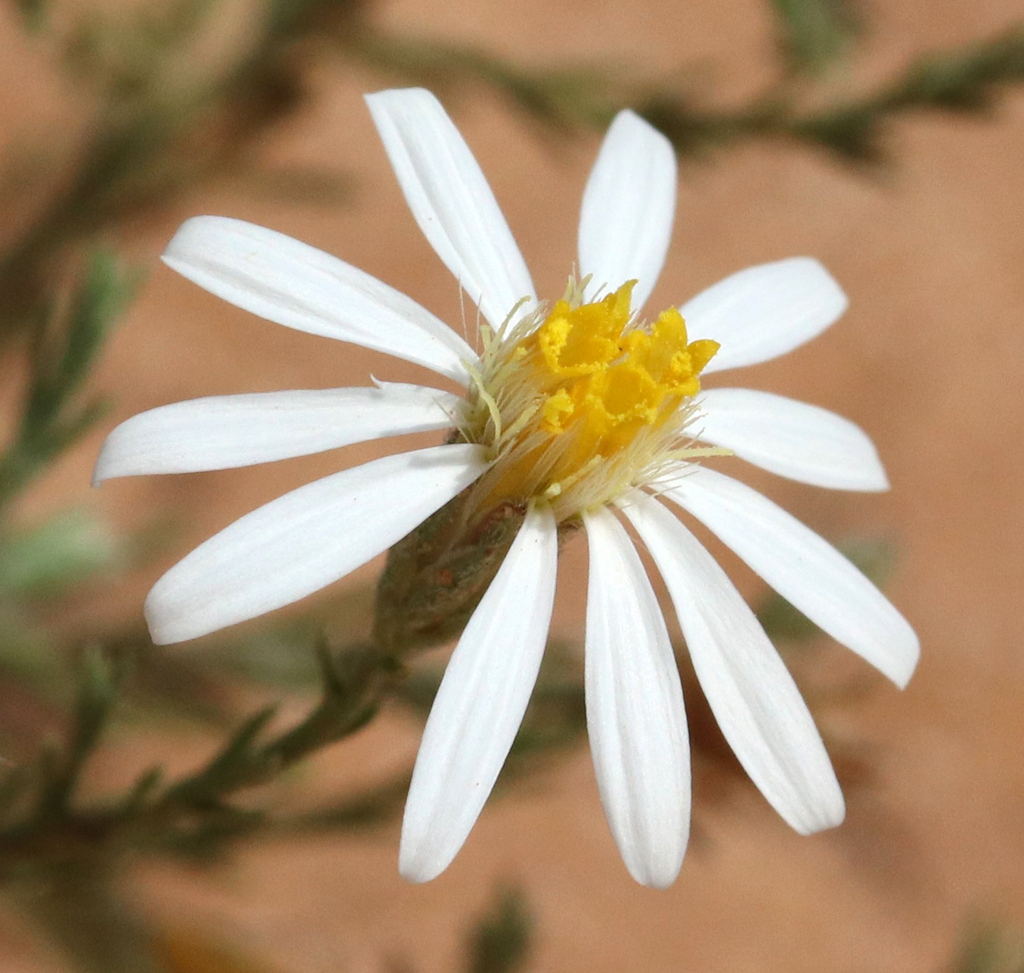
Chaetopappa ericoides
- Origin
- North America
- Part used
- See detailed notebook
- Tradition
- Traditional ethnobotany
A small daisy-family plant of North America's arid lands, Chaetopappa ericoides blooms humbly among the rocks and steppes. The Indigenous peoples of the American Southwest credited it with gentle properties, passed down through use rather than in writing, like so many quiet plants of the open country.
Traditional uses
Easing the airways
Traditionally, certain Native American communities of the Southwest used this small plant as an inhalation or a light infusion to relieve common respiratory ailments.
Traditional skin care
The fresh or dried plant was sometimes applied externally to soothe certain skin irritation, according to local practices poorly documented in botanical writings.
A ceremonial and protective use
Like several small daisy-family plants of the plains, it reportedly held a place in certain ritual or symbolic uses tied to protection, according to fragmentary oral traditions.
Before you use it
A traditional use very poorly documented scientifically: caution is warranted before any use. Avoid internal use in pregnant or breastfeeding women, as well as young children, for lack of sufficient data. Do not confuse it with other local daisy-family plants with different properties; certain botanical identification is essential. Consult a health professional or an experienced herbalist before any use, particularly if undergoing medication.
The detailed notebook
- Prepared as a paste or decoction
- Traditional duration of use
- Known contraindications
- Related species and their uses
Where to find it
Partner herbalists — available with the detailed notebook.
Sources
PFAF, Wikipedia