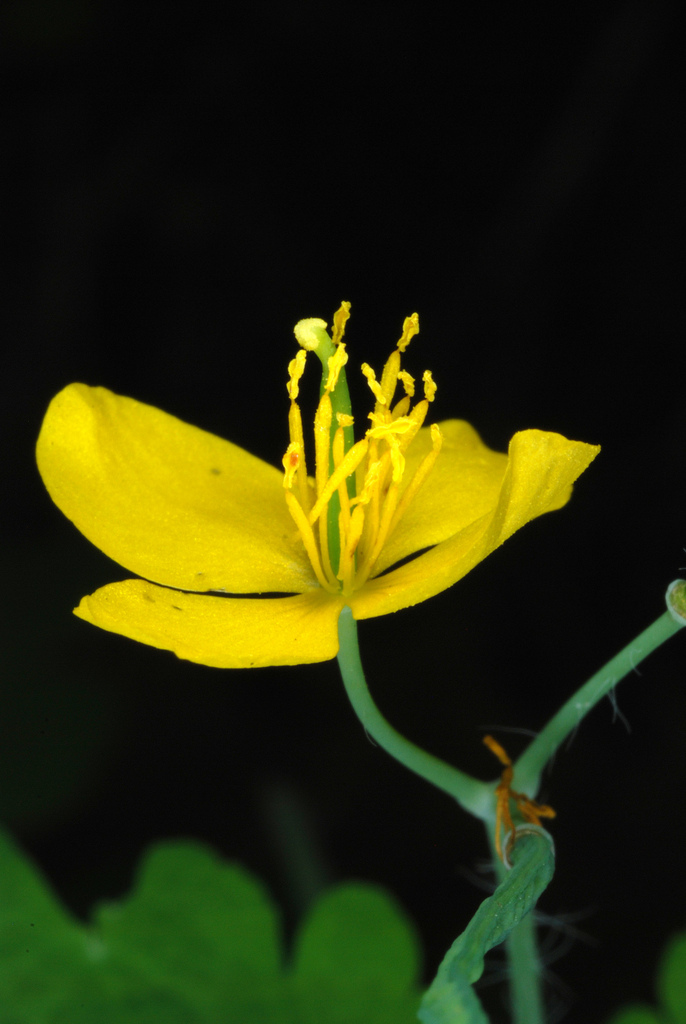
Greater Celandine
- Origin
- Europe
- Part used
- Flowers, Whole plant
- Tradition
- Traditional ethnobotany
Greater celandine, which old herbalists sometimes nicknamed the ‘wart plant,’ grows readily at the foot of old walls and among the rubble of European villages. Recognizable by its yellow-orange sap, which beads up the moment its stem is broken, it holds a singular place in traditional herbalist notebooks, particularly linked to the liver. A plant of strong character, it demands respect and discernment in its use.
Traditional uses
Traditional support for liver function
Greater celandine was traditionally associated with healthy liver and gallbladder function in European folk use. It featured in so-called spring ‘detox’ blends.
External use for skin conditions
The plant's fresh yellow latex was traditionally applied locally to warts and small skin lesions. This remains one of its best-known and most orally transmitted uses.
General digestive comfort
In certain rural traditions, a light celandine preparation accompanied difficult digestion, linked to its supposed action on the biliary system.
Soothing external use
Poultices or compresses made from the plant were sometimes used externally to relieve certain local irritations, according to old folk practices.
Before you use it
Greater celandine contains alkaloids that can be toxic to the liver; several cases of liver damage have been reported from prolonged or poorly dosed internal use, so medical advice and supervision by a qualified professional are essential before any internal use. Formally not recommended during pregnancy, breastfeeding, in children, or in anyone with a pre-existing liver or biliary condition. The fresh sap can irritate healthy skin and the eyes; avoid all contact with mucous membranes and never ingest the pure latex. Do not combine with other liver-toxic substances or medications without medical advice, due to interaction risks.
The detailed notebook
- Prepared as a paste or decoction
- Traditional duration of use
- Known contraindications
- Related species and their uses
Where to find it
Partner herbalists — available with the detailed notebook.
Sources
PFAF, Wikipedia