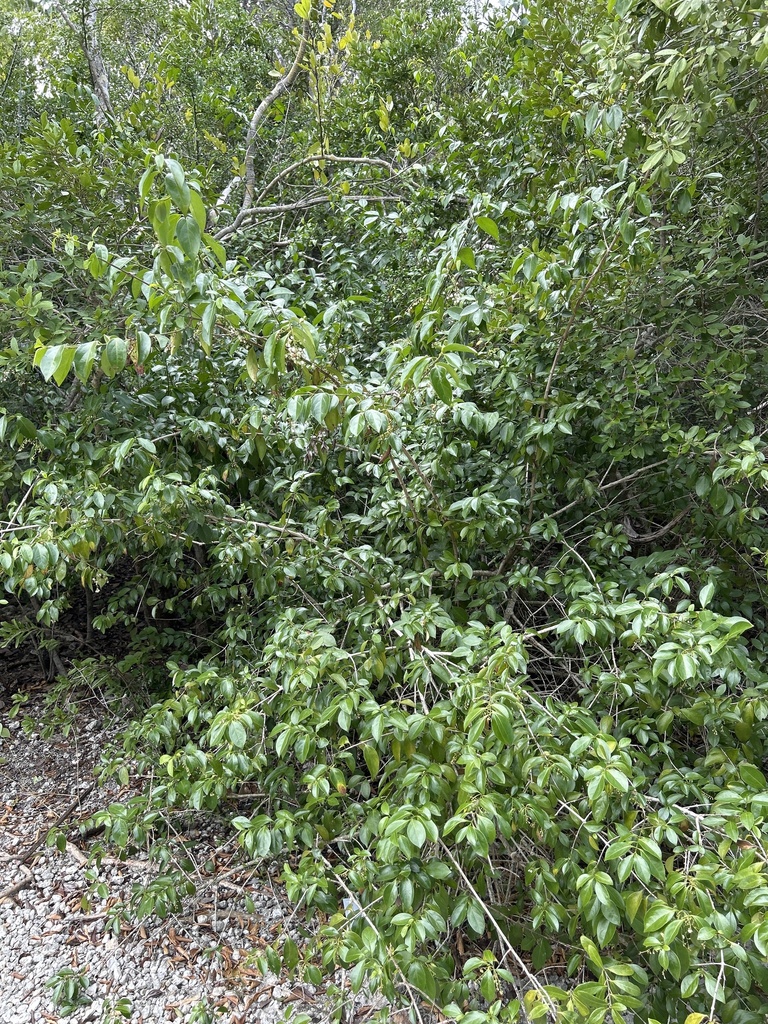
Chiococca alba
- Origin
- North America
- Part used
- See detailed notebook
- Tradition
- Traditional ethnobotany
Chiococca alba, known as "cahinca" or "bejuco de perro" in the regions where it grows, is a climbing shrub of the warm parts of the American continent. Its root, long prized by traditional herbalists of Central America, the Caribbean, and the southern United States, holds a quiet but old place in folk remedy notebooks.
Traditional uses
Traditional liver support
The root of Chiococca alba was traditionally used as a cleanser and to help with mild digestive trouble, for a purpose of 'cleansing' the body according to old folk uses.
A folk diuretic use
Root teas were reputed to promote urinary elimination in certain traditional pharmacopoeias of Central America and the Caribbean.
Easing joint pain
In the folk medicine of certain regions, preparations made from this root were used externally or internally to relieve joint and rheumatic pain.
Traditional care for skin conditions
Root decoctions or compresses have been reported in traditional uses to help with certain skin complaints.
Before you use it
The root contains compounds (including chiococcine) that can be toxic at a high dose; prolonged or unsupervised use is discouraged. Use to be formally avoided in pregnant or breastfeeding women, as the plant has a traditional reputation for acting on the uterus. Do not use in children without the advice of a qualified health professional. Consult a herbalist or doctor before any use, particularly if undergoing medication, because of possible poorly documented interactions.
The detailed notebook
- Prepared as a paste or decoction
- Traditional duration of use
- Known contraindications
- Related species and their uses
Where to find it
Partner herbalists — available with the detailed notebook.
Sources
PFAF