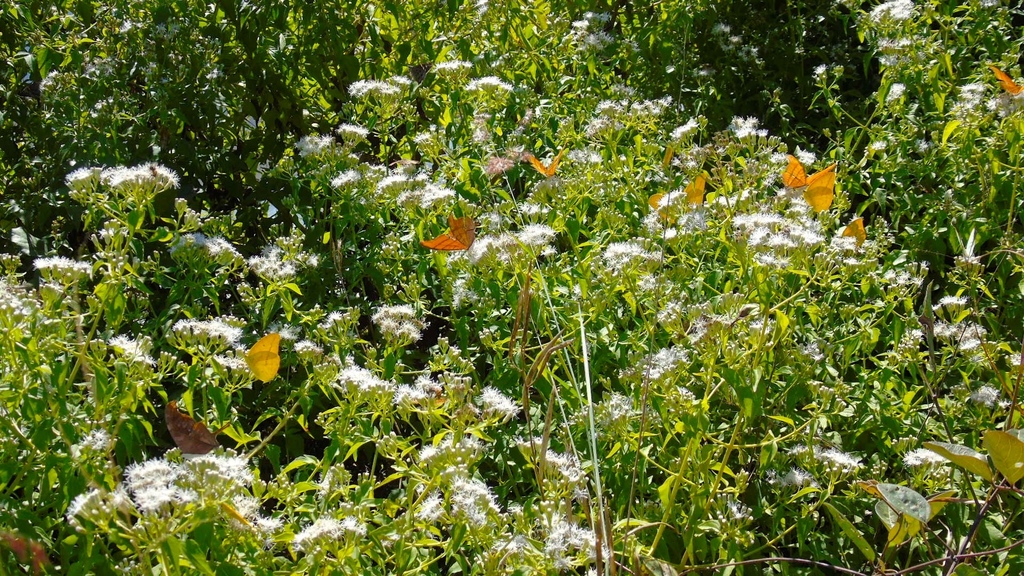
Chromolaena odorata
- Origin
- North America
- Part used
- See detailed notebook
- Tradition
- Traditional ethnobotany
Native to the Americas, Chromolaena odorata spread over the centuries to tropical Africa and Asia, where it was adopted by many folk traditions. It is often known as "Christmas bush" or "Siam weed," and tropical herbalist notebooks give it a particular place among remedies applied to minor wounds and skin conditions.
Traditional uses
Traditional care for minor wounds
The fresh leaves, crumpled or crushed, were traditionally applied to superficial cuts and scrapes, in many tropical regions, to help close the skin.
Easing skin irritation
As a poultice, the plant was used empirically to soothe certain irritation or stings, according to folk uses in West Africa and Southeast Asia.
A traditional check on minor bleeding
The sap squeezed from the leaves was reputed, in folk tradition, to help slow light external bleeding from minor injuries.
A traditional use against coughing
In certain folk pharmacopoeias of Southeast Asia, a light decoction of the leaves was occasionally used to soothe the throat and coughing.
Before you use it
A plant not recommended for internal use without supervision, because of the reported presence of potentially hepatotoxic compounds (pyrrolizidine alkaloids) in certain studies. Discouraged for pregnant or breastfeeding women, as well as young children. External use on broken skin should remain occasional; if redness, a reaction, or no improvement occurs, consult a health professional. Chromolaena odorata is considered an invasive species in several regions; its harvesting may be regulated locally.
The detailed notebook
- Prepared as a paste or decoction
- Traditional duration of use
- Known contraindications
- Related species and their uses
Where to find it
Partner herbalists — available with the detailed notebook.
Sources
PFAF