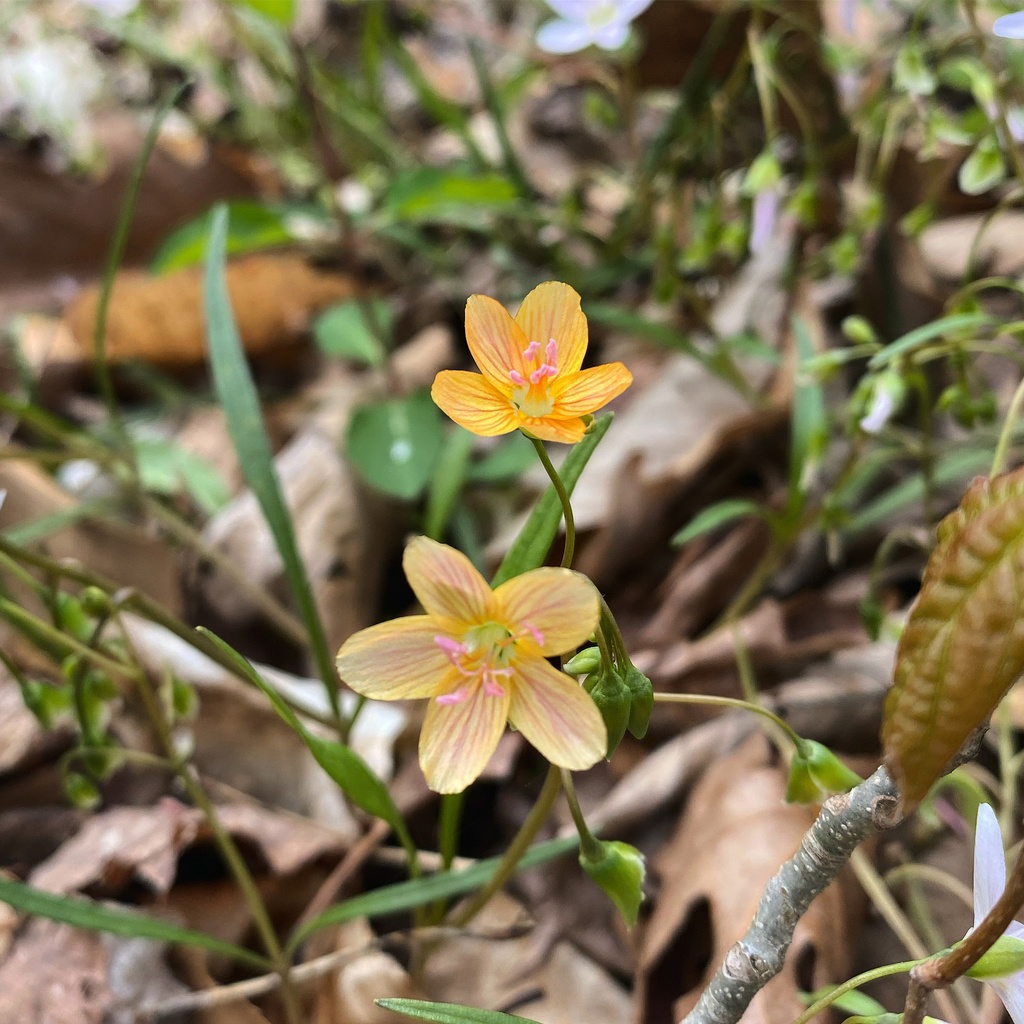
Claytonia virginica
- Origin
- North America
- Part used
- Root
- Tradition
- Traditional ethnobotany
A quiet messenger of the North American spring, Claytonia virginica, or "spring beauty," once carpeted North America's forest floors with its delicate pink and white flowers. Indigenous peoples had long known its tuberous root, sometimes a spring food, sometimes a quiet remedy passed down from generation to generation.
Traditional uses
Traditional digestive support
The root, once cooked, was traditionally eaten by certain Indigenous nations to ease mild digestive trouble, in the manner of a nourishing tuber gentle on the stomach.
A spring food tuber
Long before being considered a medicinal plant, Claytonia's root was mainly gathered as a spring food, enjoyed raw or cooked for its chestnut-like flavor.
Help with childhood convulsions
Certain oral traditions report an occasional use of root-based preparations to help children prone to convulsions, a use poorly documented today and to be regarded with great reserve.
Before you use it
The traditional medicinal uses of this plant are poorly documented in Western herbalist literature; any use other than dietary should remain exceptional. Never use this plant in children, or pregnant or breastfeeding women, without the advice of a qualified health professional. Confusion with other small tuberous-rooted plants is possible; certain botanical identification is essential before any harvesting. Consult a health professional before any therapeutic use, as safety data are limited for this species.
The detailed notebook
- Prepared as a paste or decoction
- Traditional duration of use
- Known contraindications
- Related species and their uses
Where to find it
Partner herbalists — available with the detailed notebook.
Sources
Wikipedia