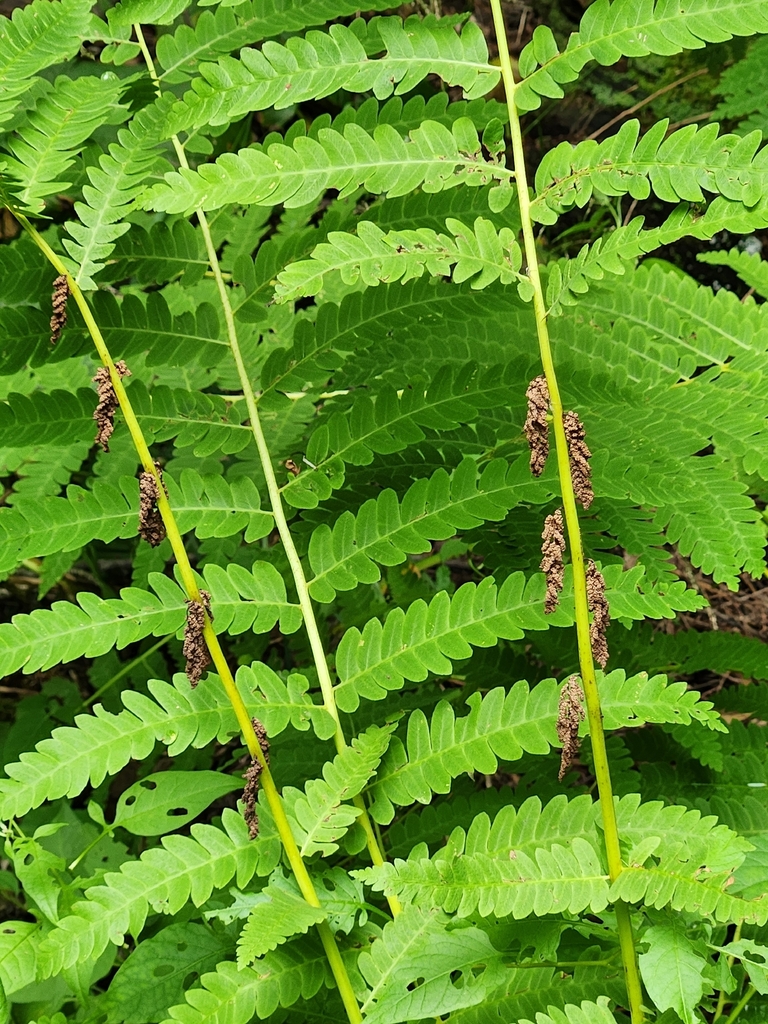
Claytosmunda
- Origin
- North America
- Part used
- See detailed notebook
- Tradition
- Traditional ethnobotany
Claytosmunda refers to an ancient fern, related to the osmundas, found in the damp undergrowth of North America. Traditional herbalist notebooks make little direct mention of it, as this plant is known mainly to botanists and knowledgeable gatherers. Its use is more a matter of botanical curiosity than a widely transmitted folk tradition.
Traditional uses
An occasional soothing poultice
Like other ferns of the Osmundaceae family, the fresh rhizome was sometimes crushed into a poultice to locally soothe irritated skin, according to poorly documented local uses.
Occasional traditional rubs
Certain communities reportedly used a rhizome-based preparation externally to relieve muscle or joint tension, though this practice is not widely attested.
A medicinal shade-garden plant
Grown in shade gardens for its foliage, this fern was sometimes associated with protective or soothing properties in certain North American folk traditions, more symbolic than therapeutic.
Before you use it
A traditional use very poorly documented: caution calls for consulting a health professional before any internal or external use. Like many ferns, certain parts may contain irritating or toxic compounds; avoid any ingestion without specialized advice. To be avoided in pregnant or breastfeeding women and in children, as a precaution, for lack of safety data. Do not confuse it with other similar-looking ferns, some of which are clearly toxic.
The detailed notebook
- Prepared as a paste or decoction
- Traditional duration of use
- Known contraindications
- Related species and their uses
Where to find it
Partner herbalists — available with the detailed notebook.
Sources
PFAF, Wikipedia