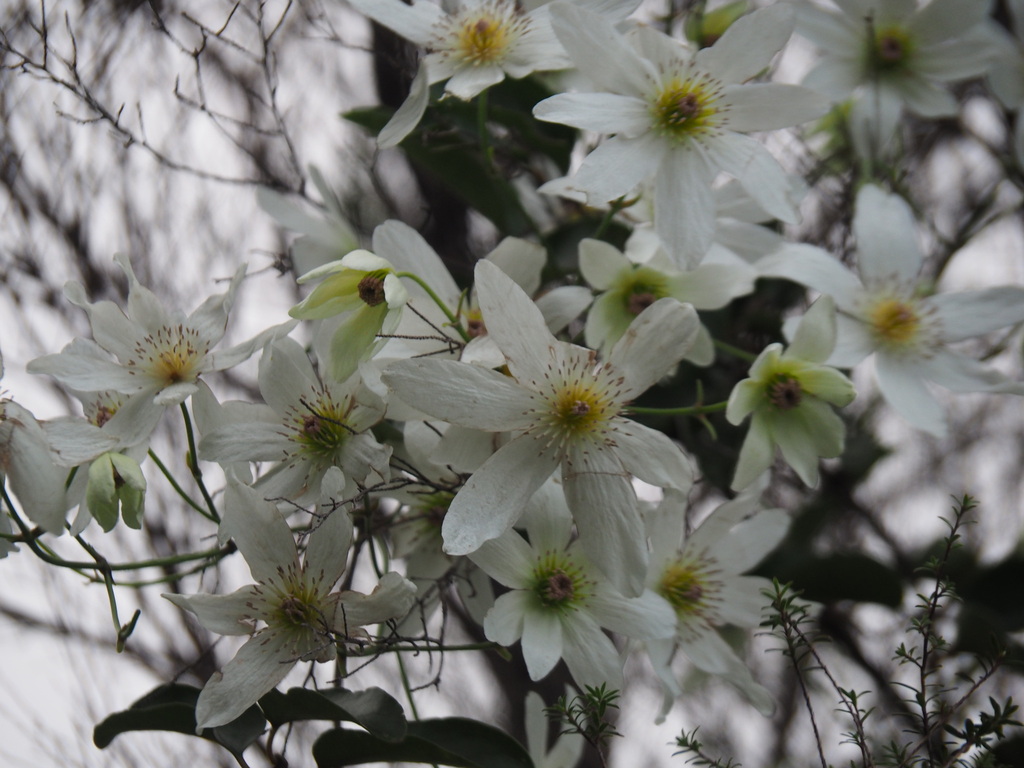
Clematis paniculata
- Origin
- Oceania
- Part used
- See detailed notebook
- Tradition
- Traditional ethnobotany
Known by the Maori name puawhananga, this climbing clematis with white star-shaped flowers adorned the forests of Aotearoa long before the arrival of the first European settlers. Traditional Maori healers knew its uses, cautious and limited, in a pharmacopoeia where this plant stood alongside more frequently used remedies.
Traditional uses
Rubs for pain and skin ailments
The crushed or ground leaves were traditionally applied externally to the skin, notably for their reddening effect reported in certain Maori practices.
Traditional relief for headaches
Certain ethnobotanical sources mention the inhalation or application of preparations made from crushed leaves for headaches, a use that has remained marginal and poorly documented.
Traditional use for sinus ailments
The sap or crushed leaves are said to have been used, with great caution, to clear the nasal passages, according to certain old ethnobotanical accounts.
Before you use it
All Clematis species contain protoanemonin, an irritant substance that is potentially toxic when fresh: never consume the raw plant internally. Direct external use on skin or mucous membranes may cause irritation, burns, or blisters; always proceed with extreme moderation and never on broken skin. Not advised for children, or for pregnant or breastfeeding women, in the absence of sufficient safety data. As this plant is poorly documented for internal use, any therapeutic use should be done under the supervision of a health professional or a qualified herbalist.
The detailed notebook
- Prepared as a paste or decoction
- Traditional duration of use
- Known contraindications
- Related species and their uses
Where to find it
Partner herbalists — available with the detailed notebook.
Sources
Wikipedia