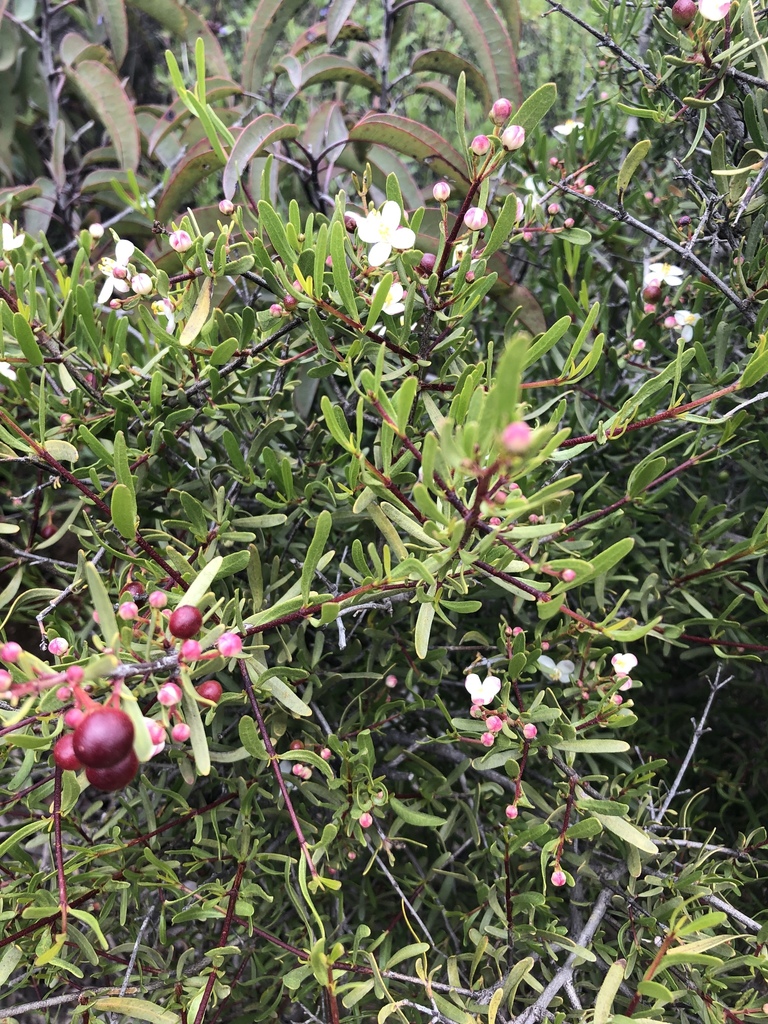
Cneoridium
- Origin
- North America
- Part used
- Leaves
- Tradition
- Traditional ethnobotany
Cneoridium, a quiet shrub of the chaparral and rocky shores of southern California and northern Mexico, is sometimes called "Baja California barberry" by field botanists. The Indigenous peoples of these arid regions knew its aromatic leaves, which they used sparingly in their traditional practices. Its sharp, resinous scent, close to that of wild citrus, betrays its kinship with the rue family.
Traditional uses
Rubs for irritated skin
The crumpled or infused leaves were traditionally applied externally to certain skin irritation, according to uses reported in the arid regions of North America.
Inhaling the aromatic vapors
The resinous, penetrating scent of the leaves was sometimes inhaled to clear the airways, in a manner close to that of aromatic plants of the same type of climate.
An occasional use as a light tea
A very diluted leaf decoction was reportedly used occasionally to ease mild digestive trouble, although this use remains poorly documented in written sources.
Foliage that keeps insects away
The fragrant foliage was traditionally placed in dwellings or rubbed onto the skin to keep insects at bay.
Before you use it
A plant little studied scientifically: no precise dosing or guarantee of safety can be established with certainty. Internal use should be avoided without the advice of a health professional or an experienced herbalist, because of the lack of toxicological data. To be avoided in pregnant or breastfeeding women and young children, as a precaution. Never use the essential oil or a concentrated extract without supervision, as the aromatic compounds of this botanical family can be irritating.
The detailed notebook
- Prepared as a paste or decoction
- Traditional duration of use
- Known contraindications
- Related species and their uses
Where to find it
Partner herbalists — available with the detailed notebook.
Sources
PFAF, Wikipedia