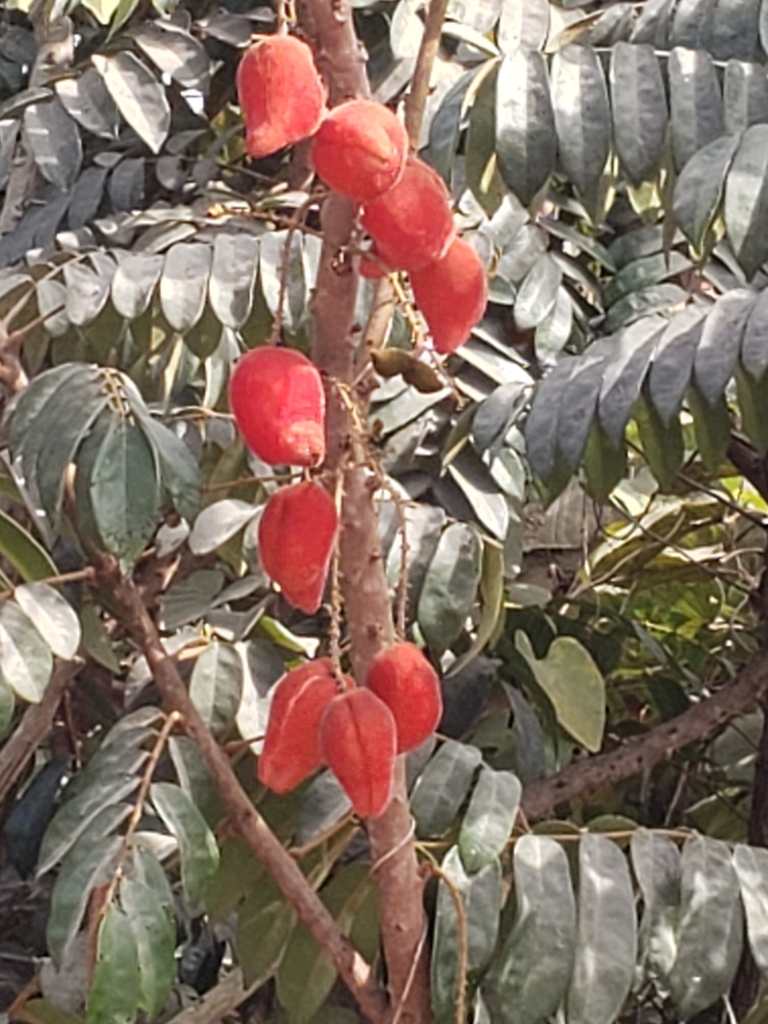
Cnestis ferruginea
- Origin
- Africa
- Part used
- See detailed notebook
- Tradition
- Traditional ethnobotany
In West Africa, Cnestis ferruginea, a vine-like shrub with downy orange fruits, has long held a prized place in traditional pharmacopeias. Known in Yoruba country as "omu" or "akara-oje," its roots, bark, and leaves were entrusted to traditional healers for various uses, from oral care to digestive ailments. Herbalists' notebooks also report its use as a chewing stick for dental hygiene.
Traditional uses
Traditional chewing stick
The stems and roots of Cnestis ferruginea are traditionally chewed in West Africa as a cleansing stick for teeth and gums, in the manner of other African dental woods.
Traditional digestive support
Root or bark decoctions were used in Yoruba traditional medicine to ease digestive troubles and abdominal pain.
Traditional use for skin conditions
Crushed leaves or a decoction were applied locally to help with certain skin conditions, according to uses reported by West African traditional healers.
Traditional use related to fertility
This plant is among those traditionally associated, in certain regions, with care related to fertility and gynecological troubles, a use to be approached with great caution today.
What to know before use
Traditional use poorly documented scientifically outside its native range; caution requires consulting a health professional before any use. Not recommended during pregnancy and breastfeeding due to traditional uses suggesting an action on the female sphere. Do not use in children without the advice of a qualified professional. Avoid prolonged self-medication; certain parts of the plant could interact with ongoing treatments.
The detailed notebook
- Prepared as a paste or decoction
- Traditional duration of use
- Known contraindications
- Related species and their uses
Where to find it
Partner herbalists — available with the detailed notebook.
Sources
PFAF